This guide helps importers, distributors and workshop managers arrange that handover. It is a planning and recording tool for professional installation, not a universal priming procedure. The oil specification, quantity, equipment, connection points and acceptance criteria must come from the applicable engine instructions.
Quick Answer
Engine oil priming before first start is a separate commissioning task from filling the sump or running in an engine. Before releasing a replacement engine for its first start, the workshop should identify the applicable service procedure, confirm the specified oil and filter, perform the prescribed priming method, and record its completion. A full sump alone does not document that this task has been completed.
Oil filling, priming and break-in answer different questions
| Task | Question it addresses | Record to retain |
|---|---|---|
| Oil filling | Has the correct oil been added in the specified amount and checked by the prescribed method? | Oil specification, quantity and level-check method |
| Oil priming | Has the applicable pre-start lubrication procedure been completed? | Procedure reference, method and observed result |
| Initial start and break-in | What monitoring and operating instructions apply after start-up? | Separate start-up instructions and observations |
Keep these three tasks separate on the job card. A note saying “oil added” should not automatically close the priming item. Likewise, a supplier’s pre-shipment video does not establish which commissioning work remains after transport, storage or installation.
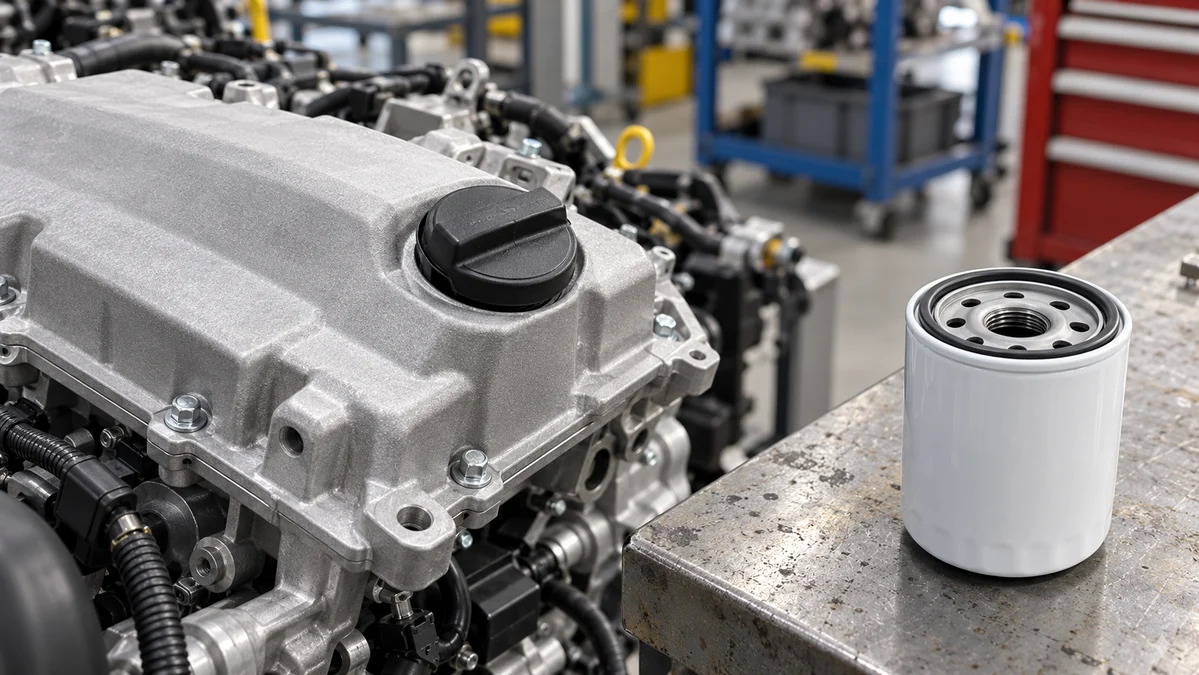
Why a universal cranking recipe is the wrong handover
Published technical instructions illustrate why the procedure reference matters. MINI’s service bulletin SIM 11 02 20, hosted by NHTSA, describes oil-circuit priming after engine replacement and certain repairs. It also warns against starting an affected replacement engine merely to find out whether it contains enough oil. Its instructions distinguish replacement work from other repairs. These are instructions within that bulletin’s application, not a recipe for every engine.
MAHLE Motorsport’s break-in guidance lists several possible oil-priming methods and separates pre-start checks from initial running. It also gives precedence to relevant camshaft manufacturer recommendations for camshaft and tappet break-in. The useful lesson for a mixed-model workshop is to select the applicable instruction rather than copy one method, oil choice or running schedule across all engines.
Assign the task before the engine reaches the workshop
For a distributor supplying a workshop network, the practical gap is often ownership of the next action. Put one named workshop contact against commissioning and one purchasing contact against unresolved supply questions. This is a suggested handover practice, not a claim about any particular order.
- Identify the installation. Record the engine code, supplied product form and vehicle or project reference. Use the engine code versus engine number guide when identifiers are being confused.
- Find the applicable instruction. Record its title, document number, revision and applicability. If the supplied assembly differs from the original configuration, ask the installer to resolve that difference before choosing a procedure.
- Confirm the handover scope. Ask what preparation records are available and which operations remain for installation. Review the installation preparation guide for the broader job.
- Agree on evidence. Decide which job-card entries, oil details and observations will be retained. Photos may support identification and visible preparation; they do not replace the required procedure or measurements.
- Close open questions before release. Name the person responsible for resolving each missing instruction or result. Keep an unresolved item visible instead of recording an assumed pass.
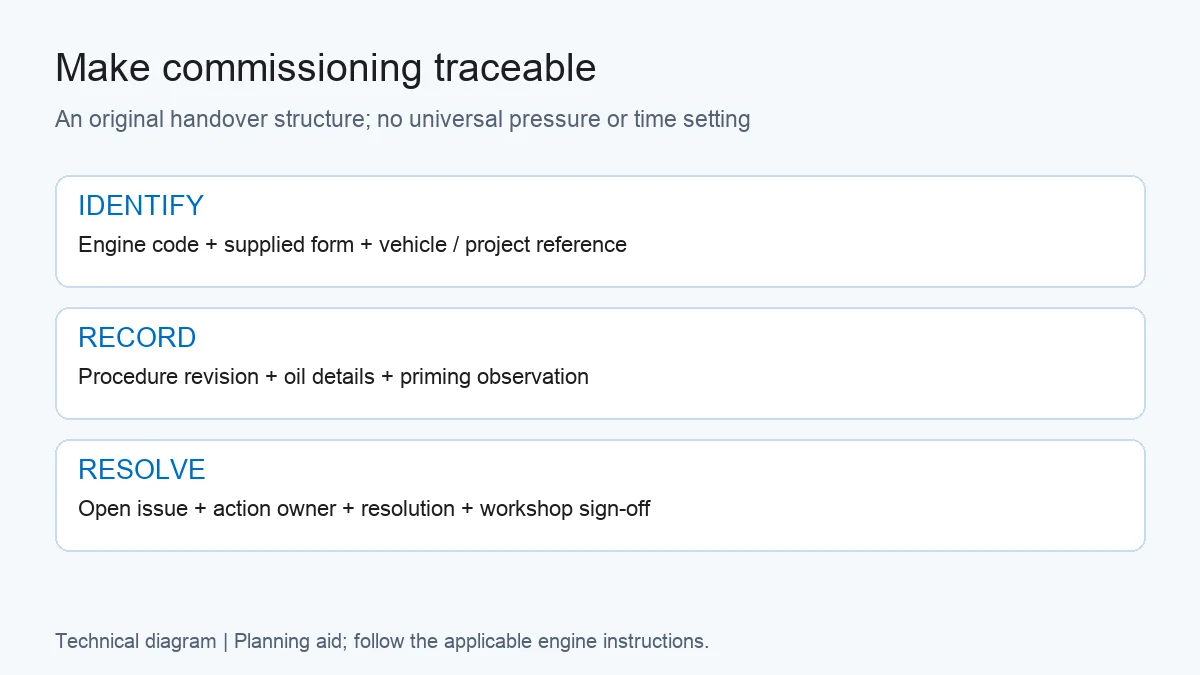
A commissioning handover record you can copy
Use the following fields in your own job card. The form deliberately leaves numerical values blank: the workshop must enter the requirements for the actual engine. It is an original administrative template, not an engine manufacturer’s approval form.
- Identity: order line, engine code, supplied form, vehicle/project reference and installer.
- Instruction: document title/number, revision, applicable engine and repair scope, and where the workshop obtained it.
- Oil preparation: specified oil, quantity, filter reference, prescribed level check and person completing the work.
- Priming: applicable method, required equipment, expected acceptance criterion, observed result, date and operator.
- Exceptions: missing information, unexpected observations, action owner and resolution reference.
- Release: workshop sign-off for the next stage and the separate initial-start/break-in instruction.
For example, “priming complete” without an instruction reference or result leaves the next shift unable to tell what was done. A better record links the actual engine, the applicable procedure and the recorded observation. This improves continuity without pretending that paperwork alone proves the engine’s condition.
When should the handover remain open?
Keep the commissioning item open if the engine identity is unresolved, the instruction cannot be matched to the installation, the required oil or equipment is unavailable, or the specified result has not been obtained. Refer the issue to the responsible installer and the relevant technical source. Do not substitute repeated start attempts for diagnosis or invent a pressure threshold from an unrelated engine.
If an unexpected result needs supplier review, retain the original job card and unedited supporting records. The engine evidence documentation guide explains how to organize a clear record; keeping evidence does not itself establish warranty coverage or the cause of a fault.
Where can NANXI POWER support the handover?
NANXI POWER can help review the engine code, VIN and original engine photos, clarify the supplied configuration and included accessories, and discuss available pre-shipment photos or videos. Send the order reference and the workshop’s specific open questions so the supply details can be checked. The installer remains responsible for selecting and following the applicable commissioning instructions; visual supply records are supporting information, not a replacement for oil-priming verification.
Technical references
- MINI SIM 11 02 20 – Oil pump and supply circuit priming after engine replacement and specified repairs; application-specific service bulletin hosted by NHTSA.
- MAHLE Motorsport: recommended break-in procedures – Separates pre-start preparation from initial running. Its instructions must be read in their stated application.
These sources support the distinctions in this guide; neither establishes the procedure for an unidentified replacement engine.
Have a specific handover question?
Send the engine code, requested product form and the point your workshop needs clarified. Contact NANXI POWER through your preferred channel.
Official business channels