Comparing wet vs dry cylinder liners by bore diameter alone can miss the feature that makes them suitable for a particular engine. The cooling arrangement, the way the liner fits the block, and the machining still required all belong in the buying decision.
Quick Answer
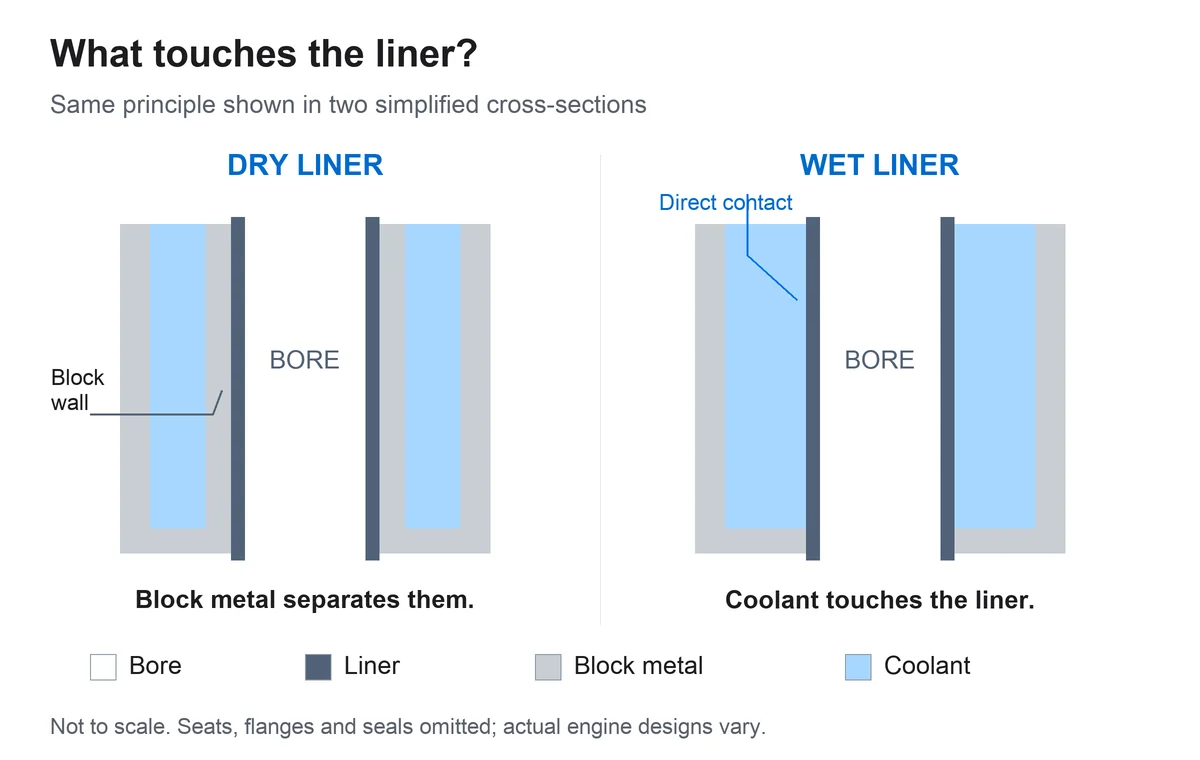
A wet liner has engine coolant against its outer wall. A dry liner sits inside the block, with block metal separating the liner from the coolant. Neither is a universal substitute for the other: match the engine design and part reference, then confirm the supplied finish and the installation requirements.
The difference is outside the bore
Both types provide a running surface for the piston rings. The words wet and dry describe the liner’s relationship with the cooling system, not whether the cylinder should contain oil.
With a dry liner, the surrounding block supports the liner and separates it from the coolant jacket. With a wet liner, coolant reaches the outside of the liner itself. Perkins’ explanation of cylinder construction makes this distinction and also identifies parent-bore engines, which do not use a separate liner in the same way.
| Question | Dry liner | Wet liner |
|---|---|---|
| Does coolant touch its outside wall? | No; block metal lies between them. | Yes, over the coolant-exposed area. |
| What deserves attention in the block? | The receiving bore, its condition and the specified fit. | The seating and sealing areas, plus the specified liner protrusion. |
| Is it ready for a piston as supplied? | Depends on whether it is finished or needs further machining. | Confirm the supplied finish and required checks; the name alone does not answer this. |
| Can bore diameter identify the part? | No. Use the engine identity, correct part reference and complete dimensional specification. | |
These are construction differences, not a ranking of quality. Choose the design specified for the engine rather than treating “wet” or “dry” as an upgrade.
Why matching the bore size is not enough
The inside diameter is only one dimension. Outside diameter, overall length and the dimensions of a flange or collar, where present, also affect the part’s relationship with the block. A matching bore does not establish a matching seat or sealing arrangement.
The supplied finish matters too. MAHLE’s liner guidance distinguishes pre-bored liners that need finishing after installation from finish-honed slip-fit types. Its dimensions list includes fitting diameter, total length and collar dimensions. Those distinctions explain why a quotation saying only “standard liner” can leave important work unspecified.
Ask whether the item is supplied finished, semi-finished or as a repair sleeve, and what machining the receiving workshop must perform. Do not assume that a smooth-looking bore is a finished bore. Use the exact part’s instructions, not a general rule that every dry liner needs pressing or every replacement arrives ready to run.
A wet liner adds a sealing question
Because coolant is outside the liner, the relevant seals and their mating areas are part of the job. Motorservice’s wet-liner installation overview calls attention to the liner seat, O-ring grooves and protrusion checks against the manufacturer’s specification.
For purchasing, the useful question is: which seals, shims or other related parts are included in this exact supply? Get an itemized answer. A photograph showing a liner beside several rings is not a packing list or proof that those rings suit the engine.
Leave seal materials, lubrication, protrusion limits and the installation sequence to the applicable engine and component instructions. This comparison is not a fitting procedure.
Six details to put in the inquiry
Send one consistent description to each supplier. That makes differences in the replies easier to spot:
- Engine identity: engine code, serial number where relevant, and the vehicle or machine application. Keep the engine code separate from the individual engine number.
- Part reference: the reference from the applicable parts information, together with any markings on the removed component.
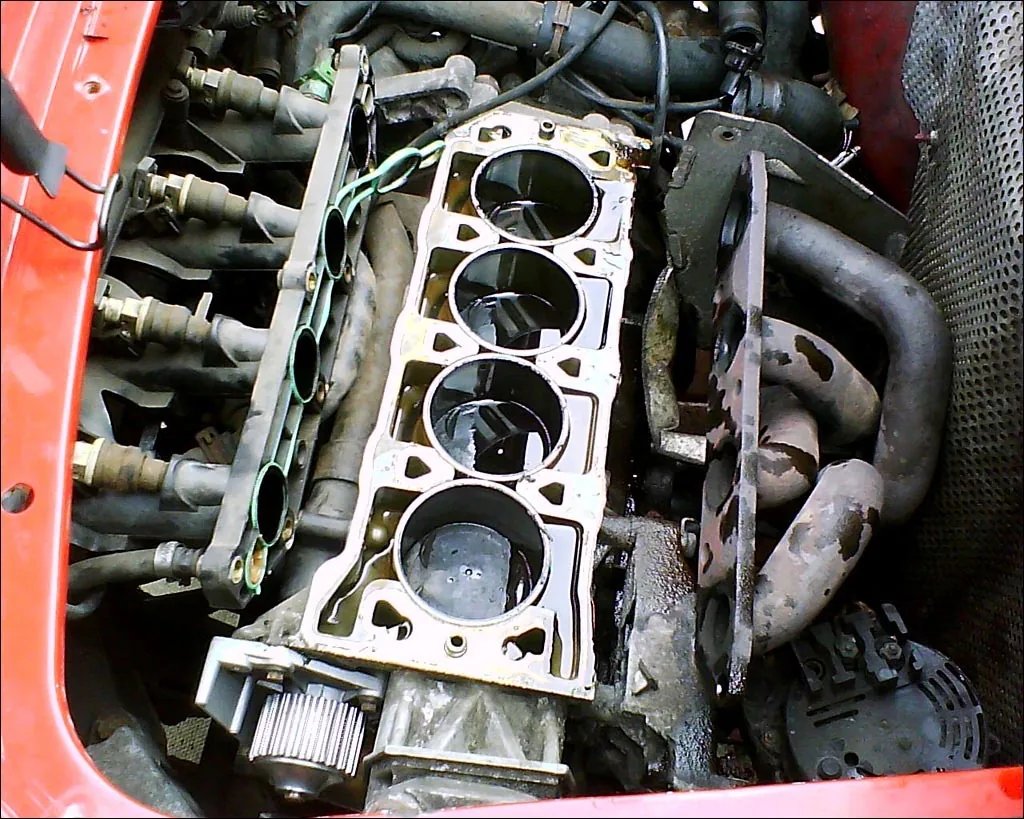
- Construction: wet, dry or another design, confirmed from technical information rather than guessed from a top-down photograph.
- Dimensions: the required bore and the other specified dimensions, including any relevant repair size. Identify the source of those figures.
- Supplied condition: finished or semi-finished, installed or loose, and any machining that remains the workshop’s responsibility.
- Included items: seals, shims or related components, listed separately rather than assumed from a product photo.
A useful question to copy into an email is: “Please confirm the exact part reference, liner construction, supplied finish, included sealing parts and any machining required before assembly.” Add the engine information and supporting photos above it.
Buying a liner is different from buying a block
If you are ordering a replacement block or engine assembly, ask what is already installed and what has been completed. “Block supplied with liners” still leaves questions about finish and included components. A bare block and a short block are different purchasing scopes; the cylinder block versus short block comparison explains that distinction.
Discussing the block with NANXI POWER
For a cylinder block or engine assembly inquiry, NANXI POWER can review the engine code, VIN and original engine photos, then help confirm the requested product form and configuration. Ask for photos of the proposed unit and a written description of what is included. This keeps the discussion focused on the actual supply: a block, a short block or another assembly, with its liner status stated clearly. Start with the engine catalogue and send the identification details for the version you need.
Three questions buyers often ask
Can I replace dry liners with wet liners?
Do not treat them as interchangeable parts. The block, coolant space, seats and sealing arrangement must suit the design. A conversion would require engine-specific engineering assessment; matching the bore alone does not establish that it is possible.
Does every engine have removable cylinder liners?
No. Parent-bore engines use the block’s own cylinder surface. Confirm the construction and available repair options from the relevant parts and service information before ordering a sleeve or assuming that a visible bore contains a removable liner.
Does a wet liner mean the engine can run on plain water?
No. “Wet” describes coolant contact, not a fluid specification. Perkins highlights corrosion and cavitation protection as important coolant functions. Use the coolant required for the specific engine, including its maintenance instructions.
Send the details that distinguish the part
Include the engine identity, part reference, clear photos and required product form.
Company channels: Made-in-China · Alibaba.com International · LinkedIn
Sources and image credit
- Perkins — Coolant: protecting your engine. Construction types and coolant functions.
- MAHLE — Sleeve assemblies and liners. Dimensions and differences in supplied finish.
- Motorservice — Installation of cylinder liners. Wet-liner seating, seals and manufacturer-specific checks.
Photo: Rover K18 engine block by Nibi, via Wikimedia Commons, released to the public domain. The photograph is a construction example. The cross-section is an original explanatory drawing, not a dimensioned installation drawing.