Quick Answer
A pre-shipment engine photo checklist should connect the physical unit to the agreed order before dispatch. Request current full-engine views, identification references, visible configuration details, included external scope and packing photos. Compare them with the engine code, original-engine evidence and quotation. Photos support review, but they do not prove internal condition, final compatibility or any item not confirmed in writing.
Why Request Current Engine Photos Before Shipment?
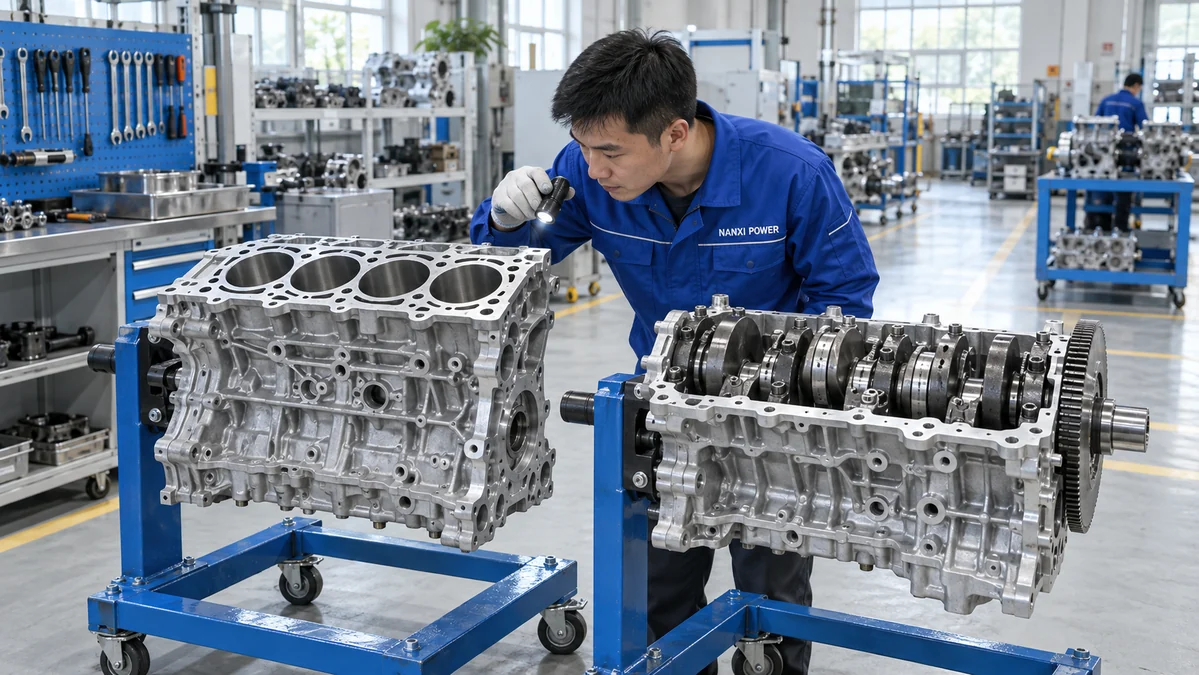
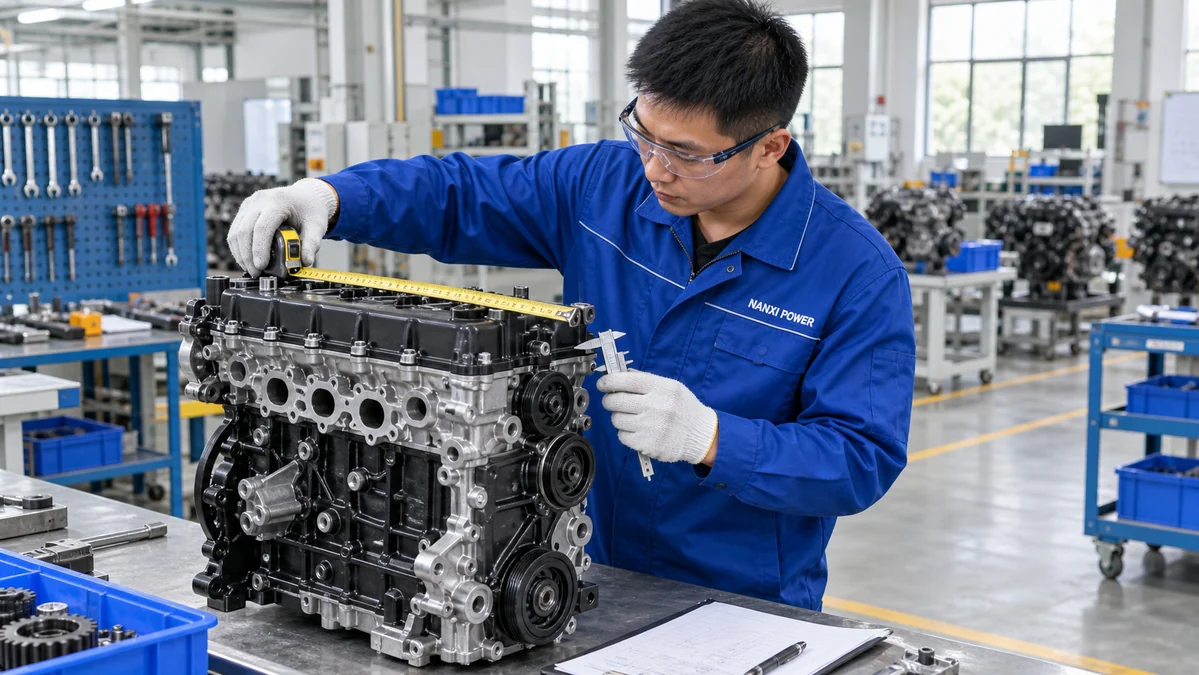
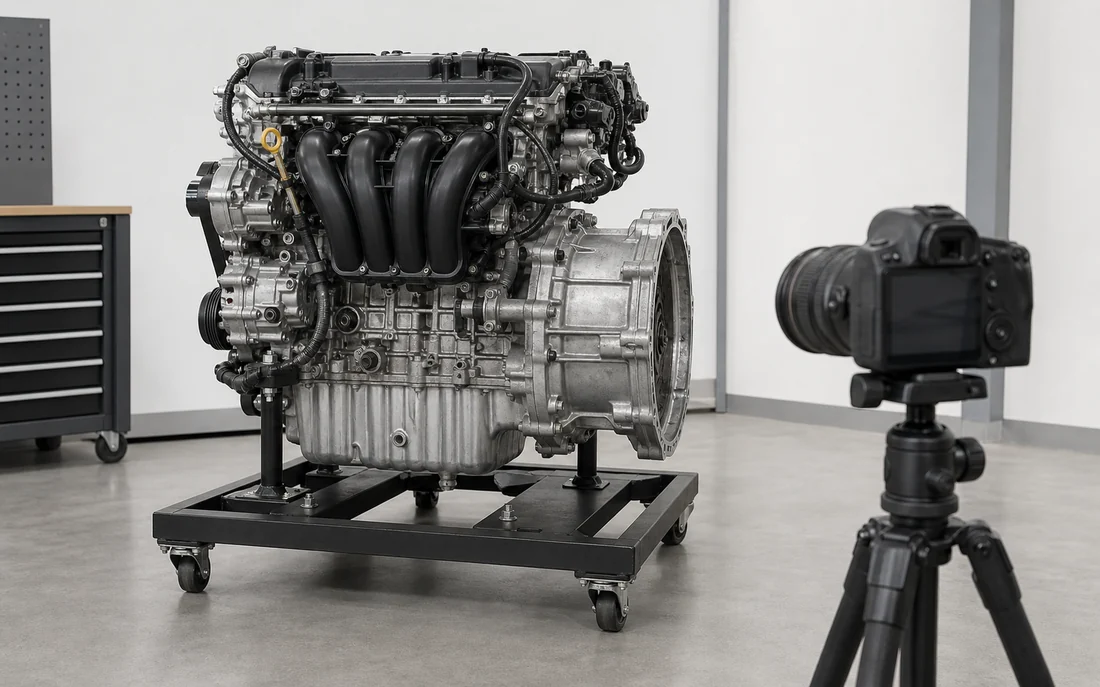
Current product photos give the buyer and supplier a shared visual record of the unit being discussed. They help both sides review visible identity clues, product form, external configuration and packing preparation against the written order. This is more useful than relying on a generic catalog image that only represents an engine family or product type.
The photo record should complement the engine quotation review guide, not replace it. A clean appearance cannot establish internal condition, test results or compatibility. Likewise, an accessory visible in a photograph is not automatically included unless the quotation and commercial agreement identify it as part of the supplied scope.
Which Photos Should Be in the Pre-Shipment Set?
Use a repeatable sequence so each image has a clear purpose. Begin with wide orientation views, then move to the identification and configuration details that matter for the order. Do not ask anyone to remove parts, expose unsafe areas or alter wiring merely to create a photograph.
- Order reference view: connect the photo folder to the quotation or purchase reference without exposing confidential details in publicly shared images.
- Full-engine views: photograph the top, intake side, exhaust side, transmission side and lower area where safely accessible.
- Identification details: include the agreed engine-code or number reference when it can be photographed clearly and appropriately.
- Configuration details: show covers, mounting areas, oil pan form, connectors, manifolds and other order-relevant visible interfaces.
- Included-scope views: record any external component specifically listed in the quotation, without assuming that every visible item is supplied.
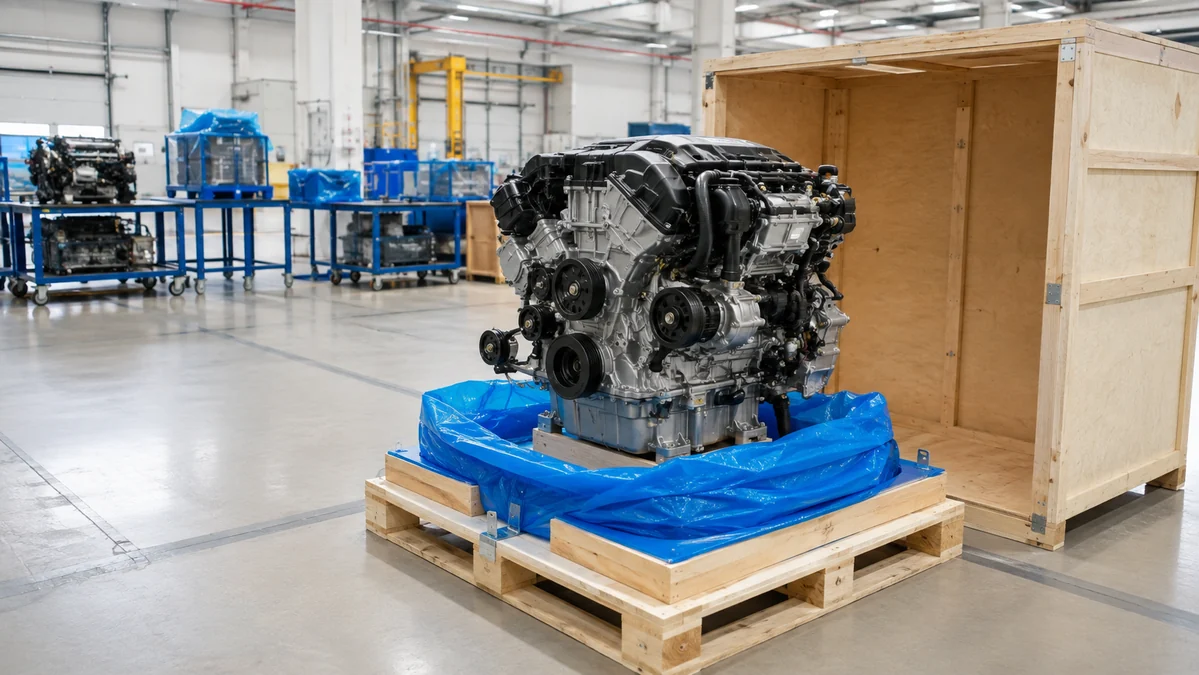
- Packing views: document protective materials, restraints and the closed package after the configuration review is complete.
If the identity reference is unclear, review the engine code identification guide. For external components, use the engine accessory configuration checklist to separate visible evidence from the written included-parts list.
What Can Each Photo Confirm—and What Can It Not Confirm?
| Photo group | Useful for reviewing | Does not prove alone |
|---|---|---|
| Full-engine views | Product form, orientation and visible overall configuration | Internal condition or final vehicle compatibility |
| Identification view | The marking or reference used for the order discussion | Every market, transmission or drivetrain detail |
| External details | Covers, interfaces, connectors, brackets and visible mounting areas | That a visible accessory is included in the price or scope |
| Packing views | The visible packing arrangement before dispatch | Elimination of every shipping or handling risk |
A Practical B2B Photo-Review Workflow
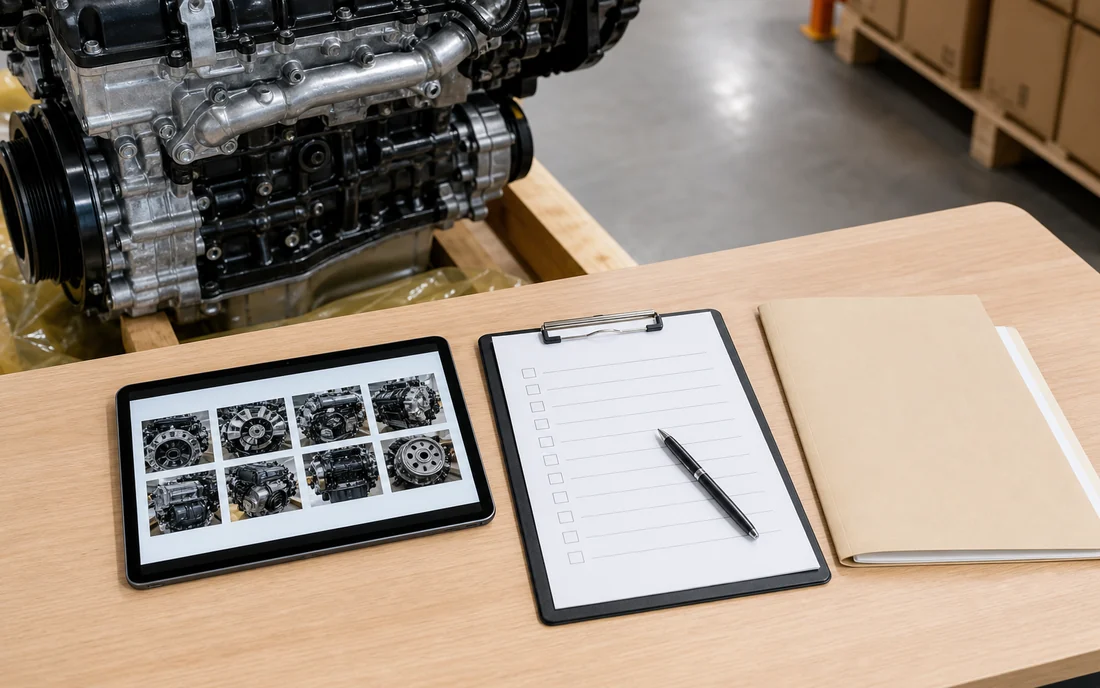
- Agree the evidence list. State the required views and order-specific questions while confirming the quotation.
- Receive the current photo set. Keep the wide views, close views and order reference in one clearly named folder.
- Compare the identity. Review the offered engine reference with the original engine code, VIN-assisted information and original-engine photos.
- Compare the written scope. Check the product form and included or excluded external components against the quotation.
- Resolve questions before dispatch. Refer to the exact image and written item instead of sending a general description.
- Keep the final record. Store the approved photo set with the commercial and shipping references for receiving comparison.
What Should the Buyer and Supplier Each Confirm?
For an agreed photo-review process, the buyer should provide the original engine evidence, required product form and a short list of order-specific questions. The supplier should connect the current photo set to the offered unit, capture the agreed visible areas and state when a requested view or component is unavailable. Both sides should compare the same written scope and retain the final photo set with the order reference. This division of responsibility keeps photographs useful as evidence without turning them into an unsupported compatibility, condition or performance claim.
NANXI POWER, operated by Zhengzhou Nanxi Engine Co., Ltd., is an automotive aftermarket engine supplier based in Zhengzhou, China. Product photos or videos can be provided before shipment as part of an order-specific confirmation process. The available product form, exact scope, packing method and shipping arrangement remain subject to the quotation and commercial agreement.
After the configuration record is complete, compare the packing plan with the engine packaging checklist. At delivery, create a separate arrival record using the receiving inspection checklist; pre-shipment and receiving photos serve different handover points.
Frequently Asked Questions
Can pre-shipment photos guarantee engine compatibility?
No. They support a visual review. Final compatibility normally requires the original engine code, VIN-assisted information, transmission, drivetrain, original-engine photos and confirmation of the offered configuration.
Is a generic catalog photo enough?
A catalog photo can explain a product family, but it should not replace current order-specific photos when visible version details or included scope need confirmation.
Does a visible accessory automatically form part of the order?
No. The exact accessories included depend on the selected configuration and must be confirmed in the quotation, current photos and commercial agreement.
Should the buyer request packing photos too?
Yes, when packing documentation is part of the agreed process. Packing photos show the visible arrangement before dispatch, but they do not eliminate every transport or handling risk.
How should a distributor organize photos for multiple engines?
Use a separate folder and order reference for each unit. Keep overview, identity, configuration and packing views in the same sequence so records are not mixed.
Prepare a Clear Engine Inquiry
Send the original engine code, VIN where available, original-engine photos and required product form through contact NANXI POWER. You can also use WhatsApp, email, or the official Made-in-China page. For B2B updates, follow NANXI POWER on LinkedIn.