Quick Answer
A replacement engine receiving inspection should create a clear arrival record before installation begins. Photograph the unopened packing, labels that are safe to share, the engine from several angles and any visible configuration details. Then compare the delivered product form and commercial documents with the agreed quotation, and raise questions while the delivery record is still intact.
Why Record a Replacement Engine at Arrival?
Receiving is a handover point between shipping, storage and installation. A simple record helps the buyer keep the original visible condition, packing arrangement and product identity information together. It also reduces reliance on memory if the warehouse team, workshop and purchasing team review the delivery at different times.
The record is not a fitment guarantee or a technical test. It is a structured way to collect the details needed for a productive question. Start with the agreed product form and scope in the quotation review guide, rather than assuming that an accessory is included because it is visible in a reference photo.
What Should the First Photo Set Include?
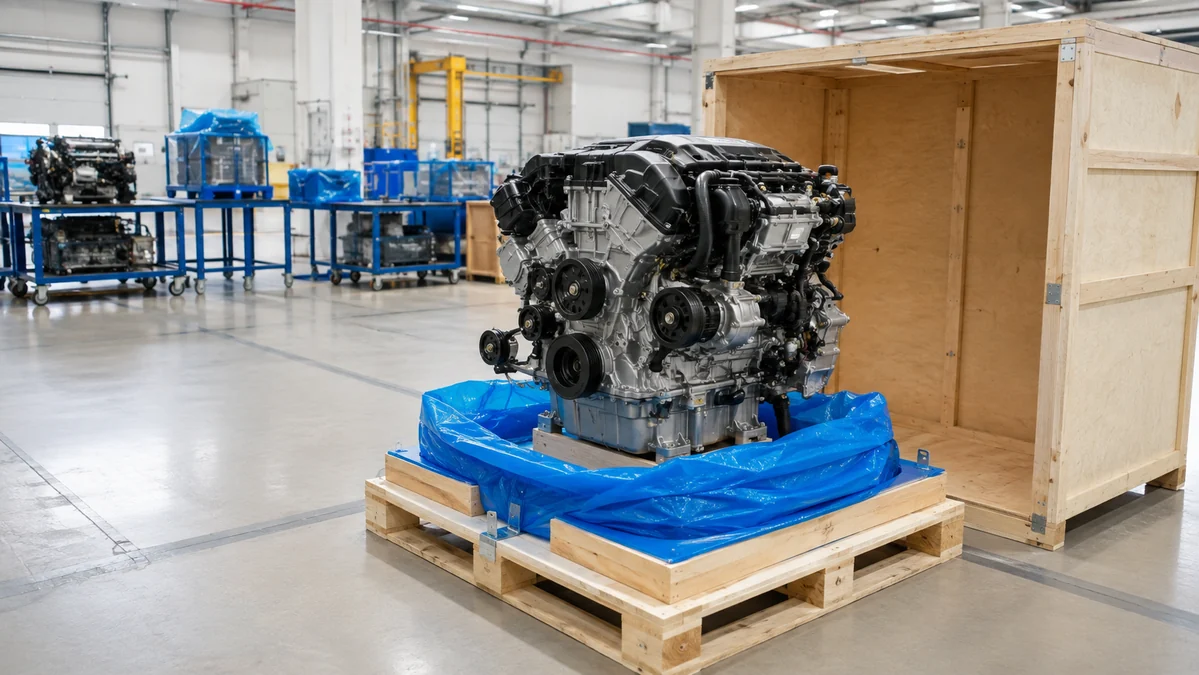
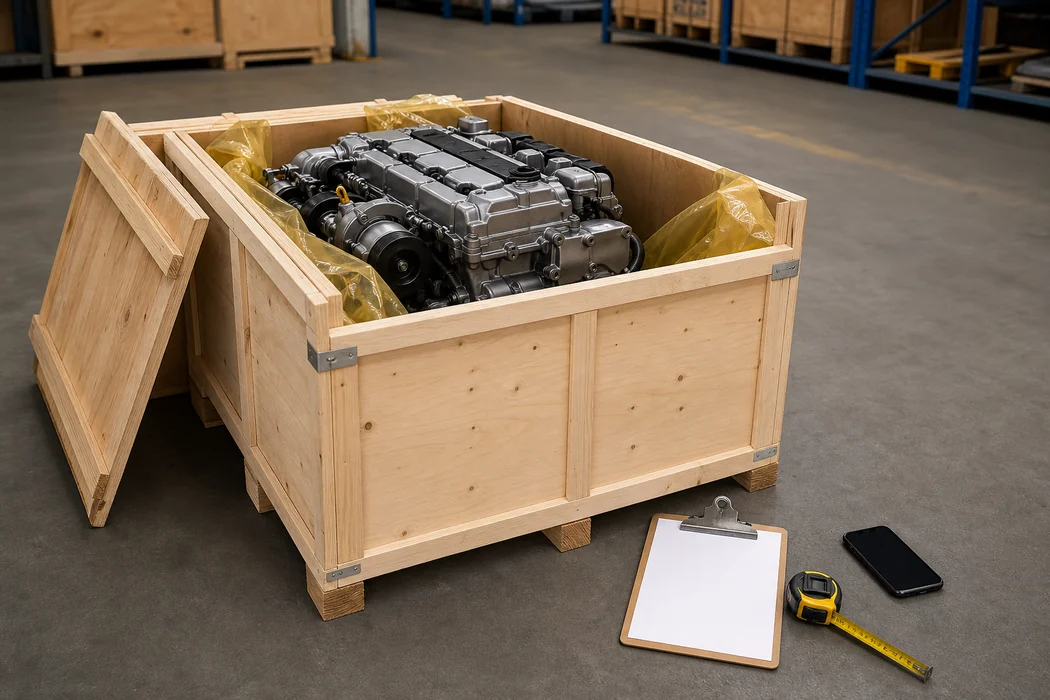
- Delivery overview: the unopened crate, pallet or outer packing from more than one side.
- Packing details: visible restraints, protective materials and any apparent external condition before removal.
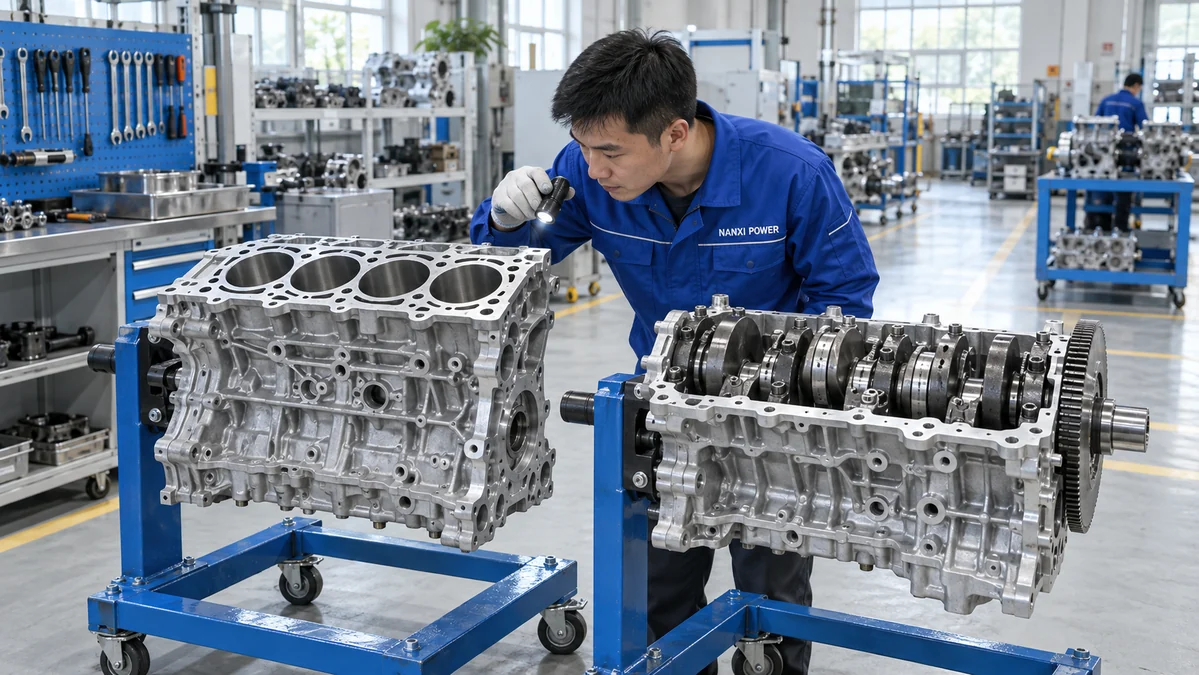
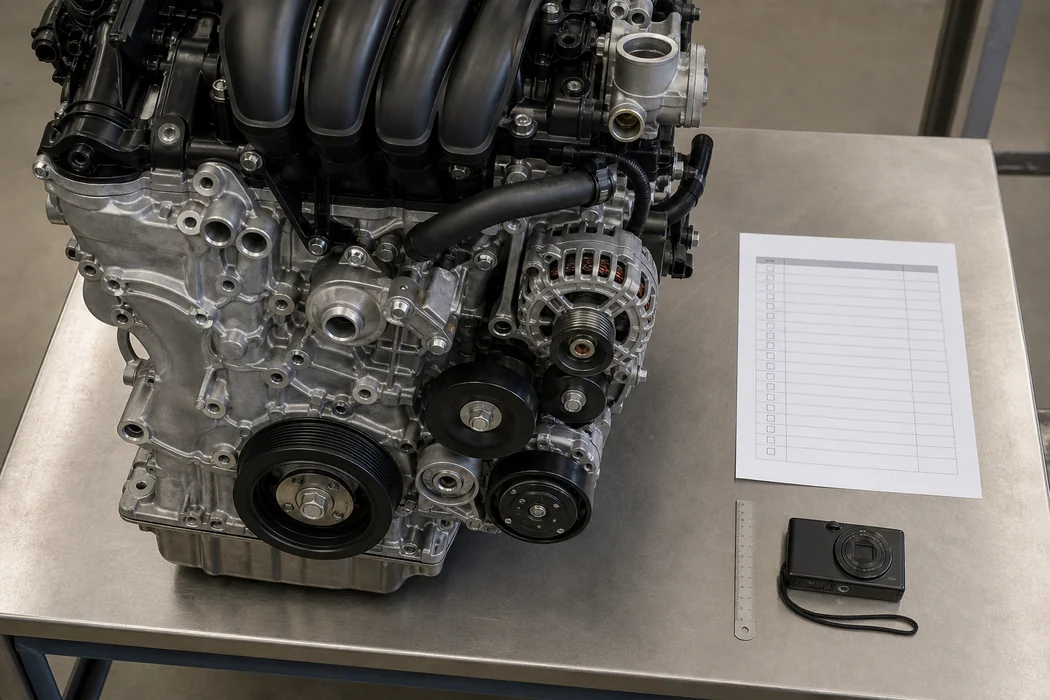
- Engine overview: top, intake side, exhaust side, transmission side and lower area where safely accessible.
- Configuration clues: mounting points, oil pan form, valve cover, connector locations and visible interfaces.
- Document reference: the purchase order, invoice or packing list reference kept separately from publicly shared images.
Keep photos in an ordered folder and use neutral filenames such as “arrival-overview” and “transmission-side.” If there is a question, the sequence makes it easier to explain what was observed without guessing a component function or engine version.
How Should Buyers Check the Packing Before Uncrating?
Photograph the exterior before moving straps, lifting the engine or discarding protective materials. Note the pallet or crate condition and preserve the opening sequence where practical. This is especially helpful when the receiving location is different from the final workshop, because later teams can see how the engine arrived.
For a broader reference on export-oriented protection, see the engine packaging checklist. Packing methods and labeling should still be confirmed for the specific order; a general guide does not establish the contents or condition of a particular shipment.
Receiving Decision Table: Record, Compare or Ask?
| Observed item | Buyer action | Useful reference |
|---|---|---|
| Outer packing condition | Photograph before opening and retain the arrival sequence. | Packing list and delivery photos |
| Product form or accessories | Compare with the written quotation; ask about any unclear scope. | Quotation and agreed configuration |
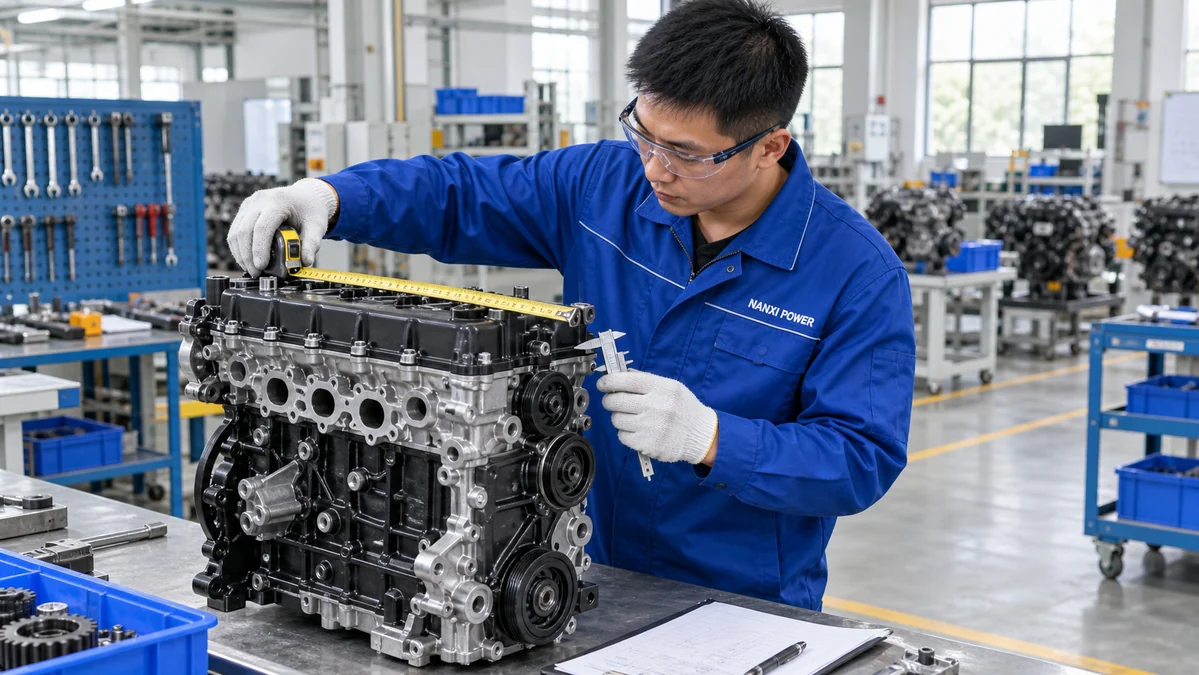
| Visible version details | Record wide and close views; do not infer compatibility from one feature. | Engine code, VIN-assisted review and original-engine photos |
| Document question | Keep the reference number and request clarification before records are separated. | The shipping document guide |
Which Visible Details Merit a Comparison?
Use the arrival photo set to preserve what is visible, not to make a final technical conclusion. The engine code, original-engine photos, transmission information and drivetrain remain important to version confirmation. The engine code identification guide explains why a code and an engine number are different reference points.
If an offered engine needs clarification, share the organized receiving photos alongside the original inquiry information. NANXI POWER can use the available record to review the question before quotation or shipment discussions continue; final configuration and included scope should be confirmed in the commercial agreement.
A Practical Buyer Receiving Workflow
- Prepare a record owner: assign one person to keep photos, document references and questions together.
- Capture the exterior: photograph packing before opening, moving or disposing of materials.
- Open safely: follow the warehouse and lifting procedures appropriate to the crate and engine.
- Record the engine: take consistent overview and detail views before installation work begins.
- Compare written scope: check the quotation, commercial terms and delivery documents together.
- Ask with evidence: send the relevant photos and document reference rather than a general description alone.
This workflow supports orderly internal communication; it does not replace the buyer’s own receiving, safety, customs or installation procedures. For B2B procurement context, follow NANXI POWER on LinkedIn.
Frequently Asked Questions
Should we install the engine before asking a configuration question?
Keep the arrival record first and ask with the original inquiry details, quotation reference and clear photos. Installation work can change the original visual condition and make later comparison harder.
Can the receiving photos confirm final fitment?
No. Photos support review, but final compatibility depends on the complete vehicle and engine information, including the original engine code, transmission, drivetrain and confirmed configuration.
What if an accessory is not visible in the crate?
Do not assume it was included or excluded from a general product name. Check the specific quotation, photos and commercial agreement, then request clarification with the receiving record.
Which documents should remain with the receiving record?
Keep the relevant purchase and shipping references together. The shipping document guide explains the distinct roles of a proforma invoice, commercial invoice and packing list.
Can a distributor use the same checklist for multiple engines?
Yes. Use the same sequence for each unit, but create a separate photo folder and document reference for every engine so records do not become mixed.
Need a Clear Configuration Review?
Send the engine code, VIN where available, original-engine photos, delivery photos and the quotation reference. NANXI POWER can review the available information for a preliminary B2B inquiry discussion.