Quick Answer
Engine order shipping documents commonly include a proforma invoice, commercial invoice and packing list. The proforma invoice records the proposed commercial arrangement before payment, while the commercial invoice and packing list support the confirmed shipment. Buyers should check that company names, engine descriptions, quantities, package details and consignee information remain consistent.
Why the Documents Should Be Reviewed as One Set
International engine orders move through several stages: inquiry, quotation, payment, product preparation, packing and shipment. Documents created at different stages should refer to the same transaction. A small mismatch in the buyer name, engine description or package count can delay communication with a freight forwarder, bank, broker or customs representative.
The supplier prepares commercial documents using the confirmed order information. The importer remains responsible for checking local import, customs, tax and registration requirements with qualified advisers in the destination market.

What Is a Proforma Invoice?
A proforma invoice, often called a PI, records the proposed order before the shipment is completed. It may identify the seller and buyer, product description, quantity, agreed price, payment terms, trade term, destination information and validity period.
The PI gives both sides a common commercial reference. Buyers should review it before payment and request corrections when names, addresses, engine codes, product forms or quantities are incomplete. Payment terms and included accessories should be stated according to the specific agreement rather than assumed from a previous order.
What Is a Commercial Invoice?
A commercial invoice describes the confirmed commercial shipment. It is commonly used by the buyer, seller, freight forwarder and customs-related parties. Its information should reflect the final order and agreed transaction rather than an early inquiry.
The description must be accurate enough for the transaction without adding unsupported technical or certification claims. Engine condition, product form and quantity should match the quotation and available product record. Local authorities may require additional information, so the importer should confirm destination-specific requirements before shipment.
What Is a Packing List?
A packing list focuses on how the shipment is physically organized. It may include package count, package type, shipping marks, net weight, gross weight, dimensions and the relationship between engines and packages. The exact fields depend on the order and logistics arrangement.
The packing list should align with the actual packed cargo. If loose accessories are approved, their package position and identification should be recorded clearly. Review the related engine packaging checklist before approving the final packing record.
Information That Should Stay Consistent
Seller, buyer and consignee names should use the confirmed legal or shipping information.
Engine code, condition, product form and quantity should follow the final agreement.
Package count, marks, destination and freight references should match the packed cargo.
A Practical Pre-Shipment Document Check
- Confirm the buyer, consignee and notify-party information where applicable.
- Compare engine codes, product forms and quantities with the final quotation.
- Check whether approved accessories are included in the document and packing records.
- Match shipping marks and package numbers to current packing photos.
- Confirm the destination, freight-forwarder instructions and agreed trade responsibilities.
- Ask the customs broker whether destination-specific fields or supporting documents are needed.
Packing Labels and Documents Should Agree
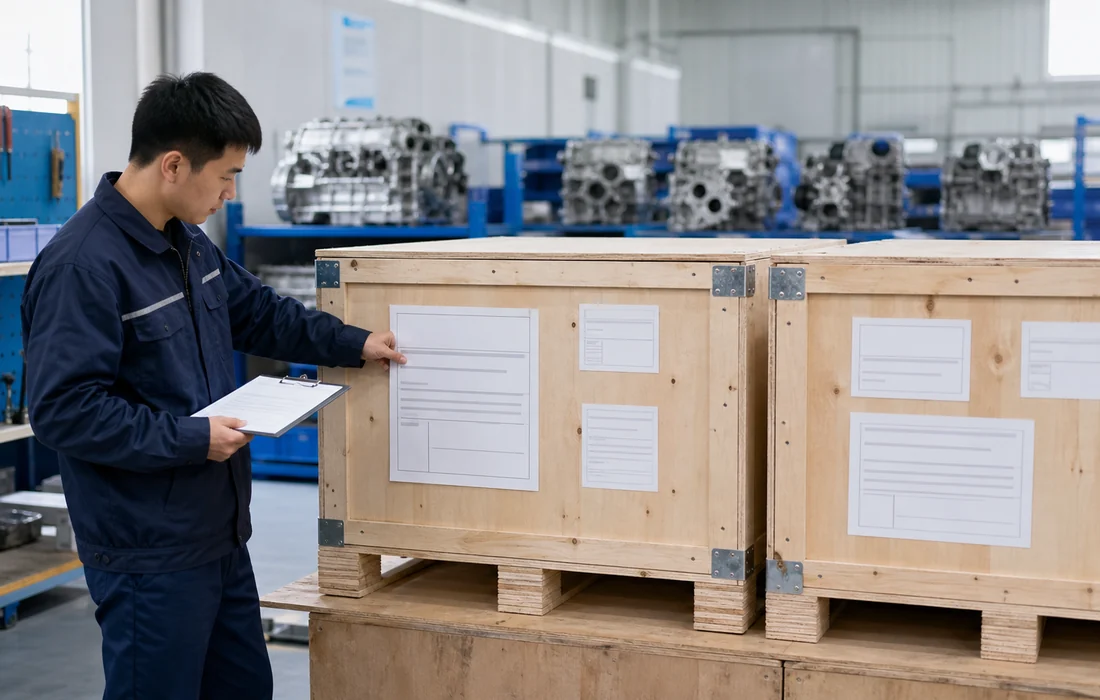
Outer labels help warehouses and forwarders identify packages, while the packing list records the shipment structure. The consignee name, shipping mark and package references should be checked before dispatch. If neutral or customer labeling is requested, the final wording remains subject to the commercial agreement.
The neutral packing and labeling guide explains how buyers can prepare label instructions without confusing the product identity or shipment record.
What the Supplier and Buyer Each Need to Confirm
Supplier-side confirmation
Prepare documents from the confirmed order, maintain consistency with the packed cargo and coordinate available shipping records.
Buyer-side confirmation
Provide accurate company and consignee details, review drafts promptly and confirm import requirements with the freight forwarder, broker or local authority.
NANXI POWER supports document and logistics coordination according to the confirmed order. Available routes and responsibilities vary by cargo and destination. Buyers can review the company’s international market coordination information for broader context.
Frequently Asked Questions
Is a proforma invoice the final customs invoice?
Normally, the PI is a pre-shipment commercial reference. The commercial invoice reflects the confirmed shipment. Buyers should follow local customs requirements.
Should the engine code appear on every document?
The required description depends on the transaction and destination. The key is to keep product identification consistent and sufficiently clear across the approved document set.
Can the packing list replace packing photos?
No. The packing list records shipment details, while photos provide visual evidence of the actual packages and labels. Both can support order checking.
Who confirms import document requirements?
The importer should confirm local requirements with a qualified customs broker, freight forwarder or relevant authority before shipment.
Confirm the Order Details Before Documents Are Finalized
Send the engine codes, product forms, quantities, buyer details, consignee information and destination. NANXI POWER can prepare order documents according to the confirmed transaction.
Follow company and B2B updates on the official NANXI POWER LinkedIn.