Quick Answer
Timing cover and timing system checks should be completed before a replacement engine is quoted or shipped. Ask for clear timing-side photos of the original engine, provide the original engine code and VIN, and compare the visible cover shape, mounting areas and surrounding configuration with the offered unit. A photo is useful evidence, but it does not by itself confirm every engine version or included component.
Why Should a Buyer Check the Timing Side?
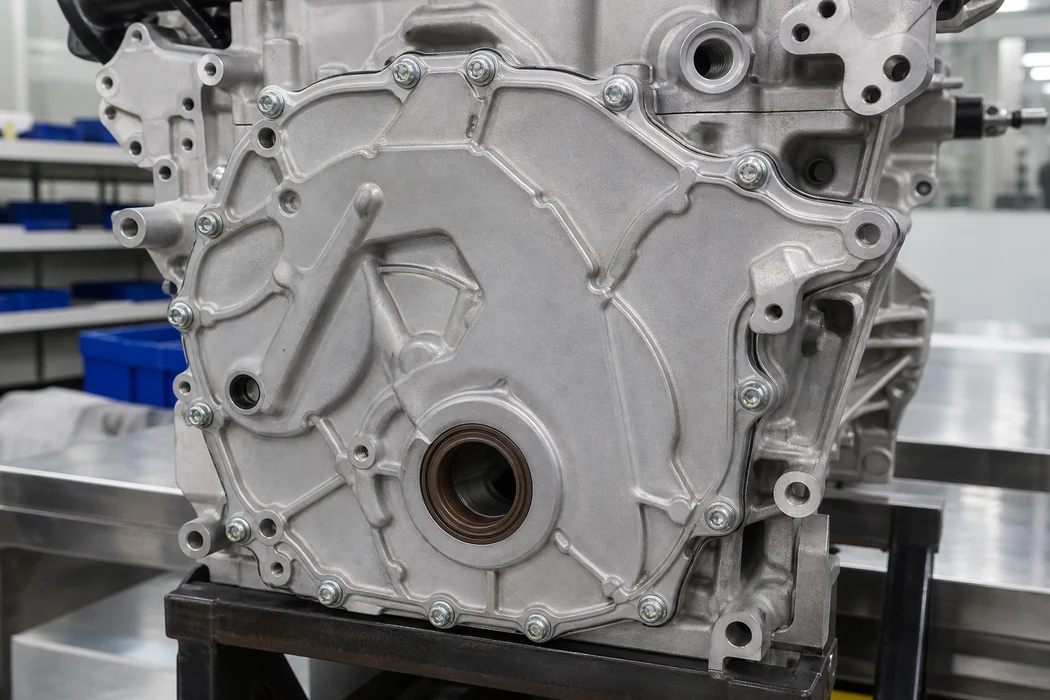
The timing side is a practical visual reference when a buyer and supplier are reviewing a replacement-engine configuration. The visible timing cover, nearby mounting areas, oil pan relationship and accessory-side layout can help show whether the offered engine deserves a closer comparison with the original unit. It is especially useful when an engine code covers more than one market, drivetrain or transmission arrangement.
The check is not a request to identify internal timing parts from one picture. A timing cover can conceal different internal arrangements, and the exact parts supplied depend on the selected product form. The buyer should therefore use the photo set alongside the original engine code, VIN, vehicle details and a written quotation scope. For related visible differences, review the oil pan configuration guide and the article on engine wiring connector photo checks.
How Do You Build a Useful Timing-Side Photo Set?
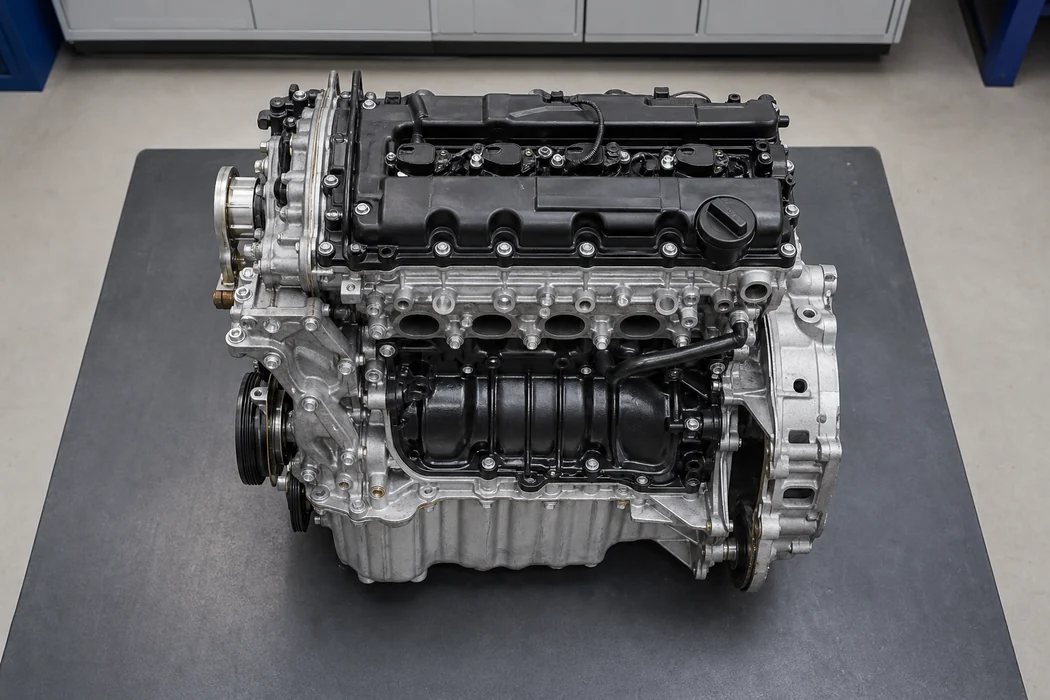
Start with a clean, well-lit view of the original engine while it is safe to photograph. Take one square-on photo that shows the full timing-cover side, then add wider views showing the valve cover, oil pan edge, engine mount area and visible accessory interfaces. If an engine code marking can be photographed safely and clearly, include that image separately. Do not remove components only to create a photo unless the workshop has approved the work.
- Use one full timing-side view so the supplier can see the cover in context.
- Add close photos of mounting areas, the lower cover and the nearby oil pan without estimating dimensions.
- State the original engine code, VIN, vehicle model, transmission and drivetrain in the inquiry.
- Ask for current photos of the offered engine before shipment, then compare the agreed visible configuration.
Which Inputs Should Be Reviewed Together?
A buyer reduces avoidable uncertainty by comparing several evidence sources rather than treating one image or one catalogue description as final confirmation. The table below is a discussion checklist, not a substitute for an order-specific technical review.
| Check | What to provide | Why it helps |
|---|---|---|
| Original engine code | A clear code marking or reliable original record | It gives the supplier a starting point for an engine-family review. |
| Timing-side photos | Wide and close images of the original unit | They support a comparison of visible cover, mounting and interface details. |
| Vehicle configuration | VIN, vehicle model, transmission and drivetrain | These details help identify differences that a photo alone may not show. |
| Quotation scope | The requested engine form and included-parts list | It prevents assumptions about covers, accessories or other external components. |
A Practical B2B Buyer Workflow
- Collect original-engine evidence. Prepare the engine code, VIN, vehicle model, transmission, drivetrain and clear photos before requesting a quotation.
- State the product form. Specify whether you need a complete engine, long block, base engine or another defined configuration. Do not assume external accessories are included.
- Send the timing-side set. Share the wide view and close photos, then explain any original parts the workshop expects to transfer.
- Review the supplier response. Ask what visible configuration has been compared and what the offered engine includes.
- Confirm before shipment. Compare current product photos, the written scope and the agreed engine configuration before final shipment arrangements.
This workflow complements the site’s replacement engine ordering checklist and the broader engine supply process. NANXI POWER, operated by Zhengzhou Nanxi Engine Co., Ltd., is an automotive aftermarket engine supplier based in Zhengzhou, China. Its team can use the provided information to review the available configuration before quotation; product availability and the final scope are confirmed case by case.
What should the quotation state?
Ask for the offered engine code, product form, visible external scope and any part that is not included. The exact accessories supplied depend on the selected configuration and should be confirmed in the quotation, current photos and commercial agreement. This written step is as important as the image comparison.
Frequently Asked Questions
Can a timing-cover photo confirm the engine by itself?
No. A timing-cover photo is a useful visual reference, but it should be reviewed with the original engine code, VIN, vehicle details and other photos before an order-specific configuration is confirmed.
Should the buyer ask whether the timing cover is included?
Yes. The included scope depends on the selected product form. Ask the supplier to state the offered configuration in writing and compare it with current product photos before shipment.
Does a VIN replace original-engine photos?
No. A VIN supports preliminary identification, while clear original-engine photos help show visible version details. Both are more useful when sent with the engine code, transmission and drivetrain information.
What should a workshop photograph around the timing side?
Photograph the full timing-cover side, nearby mounting areas, the valve-cover relationship, oil-pan edge and visible accessory interfaces. Keep the photos clear and avoid estimating hidden or internal details from the image.
When should timing-side checks happen?
Raise these checks during the inquiry and quotation stage, before payment or shipment. Early comparison gives both sides time to clarify the requested configuration and any transfer-part plan.
Send Timing-Side Details Before Quotation
Send your engine code, VIN, vehicle model, transmission, drivetrain, original engine photos, required quantity and delivery country. NANXI POWER will help review the available configuration before quotation.
For B2B company updates, follow NANXI POWER on LinkedIn. You can also review available families in the NANXI POWER engine catalogue.