Quick Answer
A cylinder block buying checklist should confirm three things before a buyer compares quotations: the correct block identity, the exact physical and machining scope, and the evidence linked to the offer. Send the engine code, available VIN and clear original-part photos. Ask whether the offer is for the block body only, what preparation or machining status is being quoted, and which photos belong to that specific inquiry.
What Exactly Is the Buyer Asking For?
A cylinder block normally refers to the main block body, but commercial descriptions are not always used consistently. A buyer should therefore define the requested product form before discussing price. A bare block body is different from a short block or another partially assembled configuration. If those terms are still unclear, review the complete engine, long block and short block guide before preparing the inquiry.
The quotation should state what is physically included and what is not. Do not assume that visible internal parts, plugs, covers, fasteners or external fittings are part of the offer merely because they appear in a reference photo. If a block is shown with additional components, ask for a written included/excluded list tied to the current quotation.
Which Details Should Be Confirmed in Writing?
| Check | What the buyer should provide or request | Why it matters |
|---|---|---|
| Identification | Engine code, available VIN, casting-area photos and original block views | Similar-looking blocks can have different versions, openings or mounting details |
| Product form | Written statement that the quote covers a cylinder block body or another defined configuration | Two prices are not comparable when the included scope differs |
| Machining status | Ask the supplier to describe the quoted preparation or machining status and any open checks | The word “block” alone does not explain the condition of working surfaces |
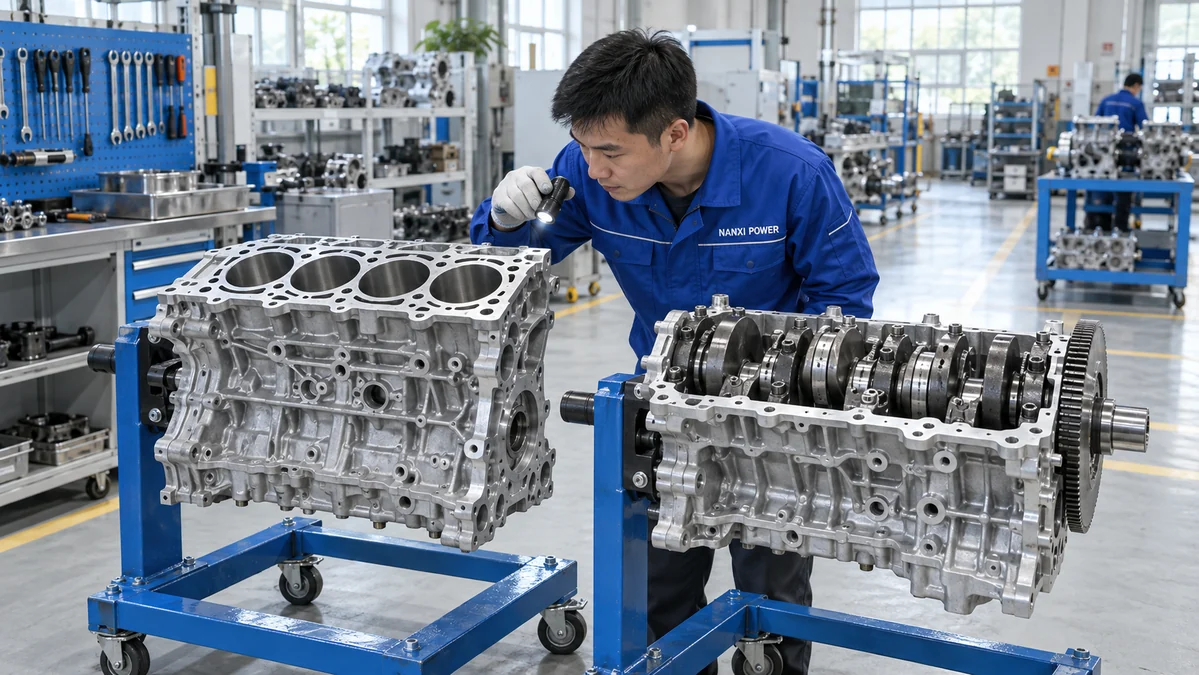
| Visible configuration | Current photos of the deck face, bore area, main openings, sides and mounting faces | Photos create a common reference for questions without proving hidden condition |
| Quotation record | Quantity, destination, quotation version and image reference numbers | Technical evidence remains connected to the actual B2B order discussion |
What Should Cylinder Block Photos Show?
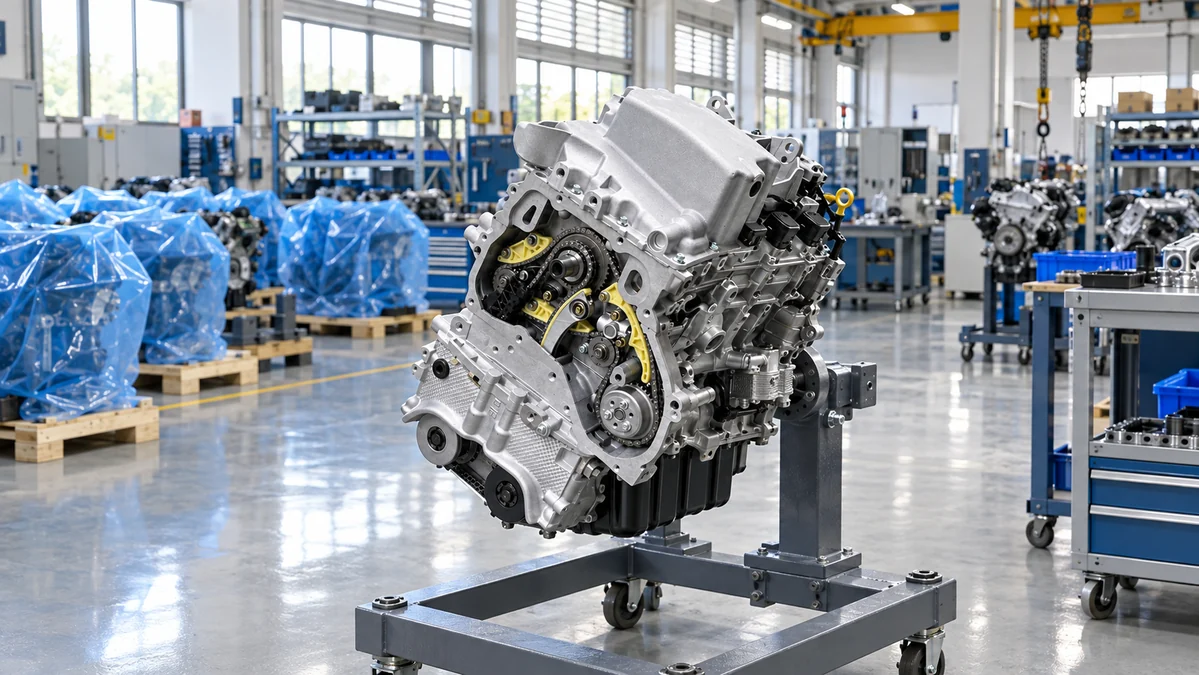
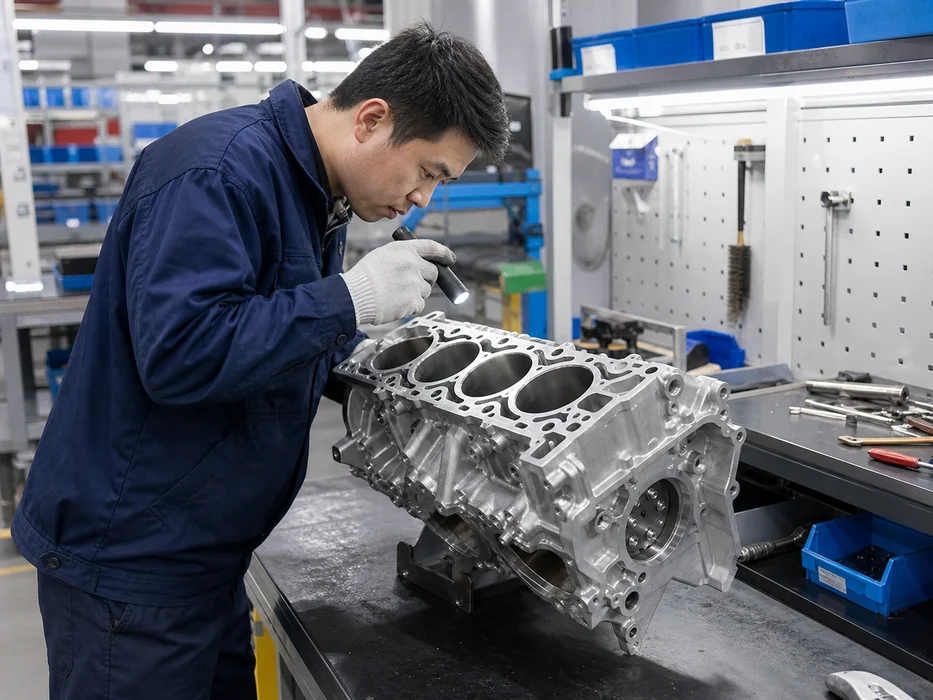
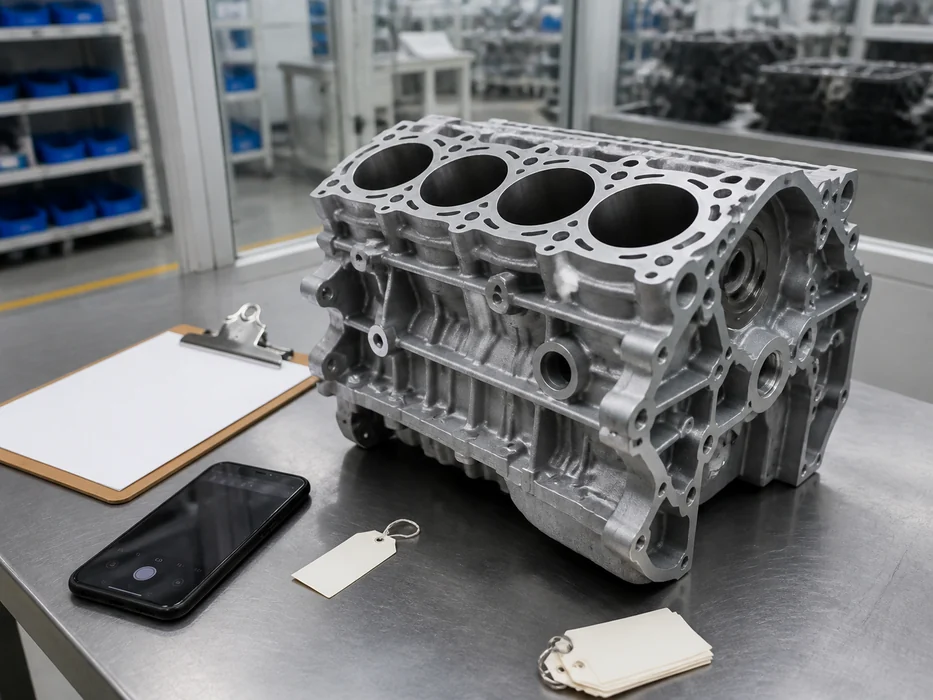
Ask for an overview plus purposeful close-ups. The overview should show the complete block body and its general orientation. Additional images can show the deck face, bore area, front and rear openings, side castings and relevant mounting points. A close-up is useful only when a wider image makes its location clear.
Photos support visual comparison; they do not prove internal measurements, crack-free condition, final machining accuracy or compatibility by themselves. Any inspection result or dimension that matters to the order should be described through an agreed document or direct supplier confirmation. The pre-shipment engine photo checklist provides a useful method for linking images to the correct order stage.
How Should Buyers Organize the Evidence Record?
Keep one compact record for each inquiry. Name the requested engine code or project reference, list the open questions, and number the photos used in the discussion. When the supplier replies, connect each answer to the current quotation version instead of mixing catalog pictures, old order images and new inspection photos in one folder.
Identification needs the same discipline. An engine number, casting mark or VIN can be useful context, but one identifier should not be treated as a universal compatibility guarantee. The engine code and engine number guide explains how these details play different roles in a parts inquiry.
A Six-Step Cylinder Block Buying Workflow
- Define the product form: state whether the request is for a cylinder block body or another specifically described configuration.
- Collect identification: provide the engine code, available VIN and clear photos of the original block and relevant marks.
- List the scope questions: ask what is included, what is excluded and which machining or preparation details remain open.
- Request current evidence: obtain a complete overview and the specific angles needed for the quotation discussion.
- Compare written quotations: review product form, evidence references, quantity and commercial terms together using the engine quotation checklist.
- Resolve open points: confirm unresolved technical and order-scope questions before payment, packing or shipping coordination. The broader engine supply workflow shows where this review fits.
How Can NANXI POWER Support a Cylinder Block Inquiry?
NANXI POWER can review the engine code, available VIN and original-part photos, then help keep the requested cylinder block form and visible configuration clear in the quotation discussion. Buyers can also send the required quantity, destination country and specific evidence requests. Current photos and quotation references can then be organized around the same inquiry, giving both sides a practical basis to resolve open scope questions without turning a general checklist into a fitment, machining or availability promise.
Frequently Asked Questions
Is a cylinder block the same as a short block?
No. A cylinder block generally refers to the block body, while a short block describes a more assembled product form. The exact included components still need written confirmation for the selected offer.
Can the VIN alone identify the correct cylinder block?
The VIN can support preliminary identification, but buyers should normally also provide the engine code and clear original-part photos. Final version and configuration questions require order-specific confirmation.
Do photos prove the machining condition?
No. Photos can show visible surfaces and configuration, but they cannot establish hidden condition or precise machining results. Ask for a written description of the quoted status and any required order-specific evidence.
Which block areas should appear in the photo set?
Request a complete overview plus the deck face, bore area, main openings, sides and relevant mounting faces. Add close-ups only when the location is clear from a wider view.
What should a B2B inquiry include?
Include the engine code, available VIN, original-part photos, requested product form, quantity, destination country and a short list of scope or evidence questions that must be answered in the quotation.
Request a Cylinder Block Review
Send the engine code, available VIN, original block photos, requested product form, quantity and destination. NANXI POWER can help organize the identification, configuration and quotation questions for your current inquiry.
Email Your Cylinder Block Inquiry•View Our Made-in-China Store
For practical engine procurement updates, follow the official Facebook page.