Quick answer: A 2AZ-FE Camry intake manifold rattle can sound like an engine problem, but the noise alone does not justify ordering a replacement engine. Toyota bulletin T-SB-0034-08 Rev2 describes an intake-manifold noise condition on certain US-market 2002–2004 non-PZEV Camry vehicles. First establish that the vehicle matches the bulletin, then have the workshop identify the source of the noise. The bulletin does not establish that every 2AZ-FE rattle has this cause.
Which Camry does the bulletin cover?
Toyota’s US service bulletin describes a rattle from the engine area that is most noticeable at idle or during light acceleration. It identifies intake airflow through the manifold as a possible cause and describes a modified intake manifold intended to improve that condition. This is a specific service condition with a defined vehicle scope, rather than a general explanation of engine noise.
The listed application is the 2002–2004 Camry with the 2AZ-FE engine, excluding PZEV vehicles. PZEV is an emissions classification; it matters here because the bulletin expressly distinguishes the vehicle versions. A registration year and the words “2.4-liter Camry” are insufficient to establish applicability. The workshop needs the vehicle identification number, engine identity and emissions information. The bulletin also limits the condition to production before its listed effective VINs: TMMK Line 1, 4T1BE3#K#4U262489; and TMMK Line 2, 4T1BE3#K#4U790816. Have the technician interpret these patterns against the vehicle record rather than treating the model year alone as sufficient.
The document’s applicability table also contains vehicle-identification details. The technician should compare the complete vehicle record with the complete bulletin and check the current manufacturer’s service information before selecting a repair. Do not extend this Camry bulletin to a RAV4, a later Camry, a different market or every engine carrying a 2AZ designation.
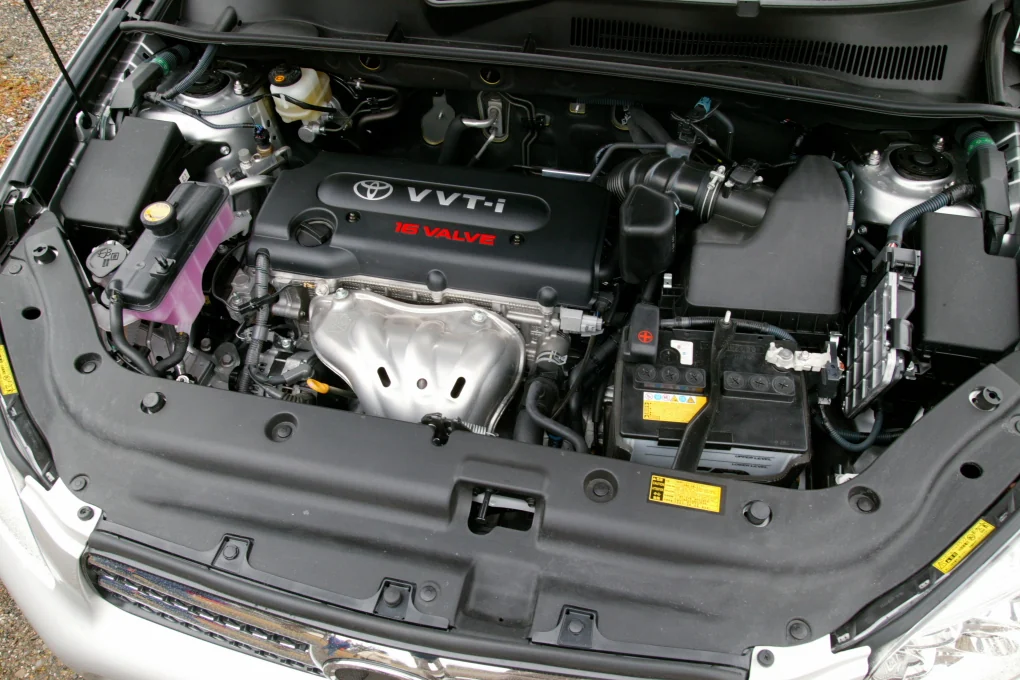
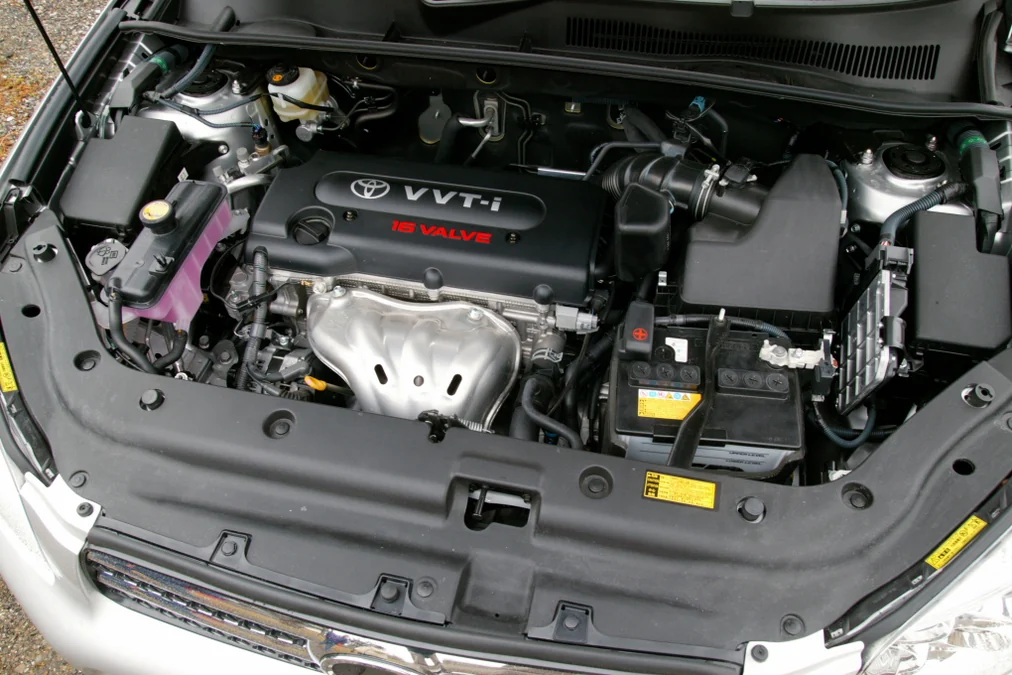
The photograph separates visible components from the assembly discussed in the bulletin. The large silver front shield is on the exhaust side. The ribbed black duct and air cleaner are visible at the right; the intake manifold is not exposed here. A noise reported from the engine bay cannot be assigned to the manifold by looking at the engine cover.
What should the workshop record before ordering parts?
A useful report describes when the noise occurs and where the technician has located it. “Engine rattles” leaves the buyer unable to distinguish an external component repair from internal engine work. Ask the workshop to record these observations before making a purchase decision:
- Vehicle identity: VIN, model year, market, engine identification and emissions version. Keep photographs of the identification labels alongside the written record; the engine identification guide explains what to send.
- Operating condition: whether the noise was present at idle, during light acceleration or in a different condition. A cold-start-only complaint should not be silently rewritten to match an idle-noise bulletin.
- Located source: the component or area identified by the technician, the method used and any remaining uncertainty. A recording can preserve the complaint, but a phone microphone alone does not locate its source.
- Associated findings: warning indications, fault codes and any other symptoms actually observed. Record what was found without inventing a connection between a code and the manifold.
- Recommended repair: the specific assembly proposed, applicable service information and the evidence supporting that recommendation.
These are documentation requests, not instructions to probe a running engine. Access around moving belts, hot components and electrical equipment requires the appropriate workshop procedure. This article does not prescribe a listening-tool position, a running-engine manipulation or a test threshold.
What does the finding change?
If the vehicle matches the bulletin and the workshop confirms the described intake-manifold condition, the purchase discussion should address the applicable manifold repair. Toyota’s stated sequence is to verify that the noise comes from the intake manifold, replace the manifold using the applicable model-year repair manual, and verify that the noise is absent after repair. This summary does not replace the referenced installation instructions. An engine-area rattle does not by itself establish a damaged cylinder block, crankshaft or cylinder head. The distinction matters because a long-block order may leave the original external intake assembly in use.
If the noise occurs in a different operating condition, or the vehicle falls outside the listed application, that does not prove the manifold is sound. It means this bulletin cannot supply the diagnosis. The workshop needs the service information for that vehicle and evidence for the actual noise source. Do not force an uncertain complaint into a familiar bulletin merely because the engine code looks similar.
If the workshop identifies internal engine damage independently, preserve those findings separately. A manifold bulletin neither proves nor excludes another fault. The buyer can then compare the documented repair with an engine replacement using the repair-or-replace decision guide. Keep the technical diagnosis separate from the price comparison so that a low quotation does not become the reason for selecting an unsupported repair.
Will a replacement long block include the intake manifold?
Do not assume it will. Product descriptions vary, and the included external assemblies must be confirmed in the actual quotation. Use the engine assembly scope guide to describe the requested product form, then ask the supplier to identify each included and excluded assembly in writing.
For this complaint, ask three direct questions: Is the intake manifold supplied? If the original manifold will be transferred, has its condition been assessed? Which vehicle details were used to select the quoted engine version? These questions prevent a replacement-engine purchase from leaving the diagnosed noise source outside the order.
Confirming the engine scope with NANXI POWER
NANXI POWER can assist with engine identification using the engine code, VIN and original engine photos, and confirm the configuration and included accessories in a quotation. Send the workshop’s diagnosis alongside that information so the requested product form addresses the actual repair decision. Current Toyota catalogue entries include 2AZ Camry and RAV4 versions; these are navigation destinations, not confirmation of compatibility with a particular vehicle. Confirm the exact version before ordering.
Current catalogue pages: 2AZ CAMRY Engine Long Block, 2AZ OLD CAMRY Engine Long Block, 2AZ OLD RAV4 Engine Long Block, 2AZ RAV4 Engine Long Block. See also Toyota engines. Confirm compatibility by VIN, original engine code and configuration before ordering.
Technical source and limits
Source: Toyota T-SB-0034-08 Rev2, “Intake Manifold Noise”, hosted by the US National Highway Traffic Safety Administration. This historical service bulletin is not a recall statement or a promise of current warranty coverage. The workshop must use current applicable manufacturer information. No repair, inspection result or customer case in this article is presented as a NANXI POWER workshop record.
Send the diagnosis with the engine inquiry
Include the VIN, engine identification photographs, emissions version, workshop findings and the exact assembly scope required. Clear identification helps the supplier compare the request with the available product version; it does not replace diagnosis.
Photography: Tennen-Gas / Wikimedia Commons, CC BY-SA 3.0. Cover and sharing images are cropped and resized; source photograph and adaptations remain available under the same license. No endorsement by the photographer or Toyota is implied.