Quick Answer
Replacement engine storage after delivery should begin with the supplier’s instructions for that exact product and order. Keep the engine or its crate securely supported in a clean, dry indoor area, preserve the identification and order records, avoid stacking or moving it in an unapproved way, and ask the supplier before removing protective packaging or changing how the unit is stored. Preparation can vary by product form, packaging and commercial agreement.
What Does Replacement Engine Storage After Delivery Cover?
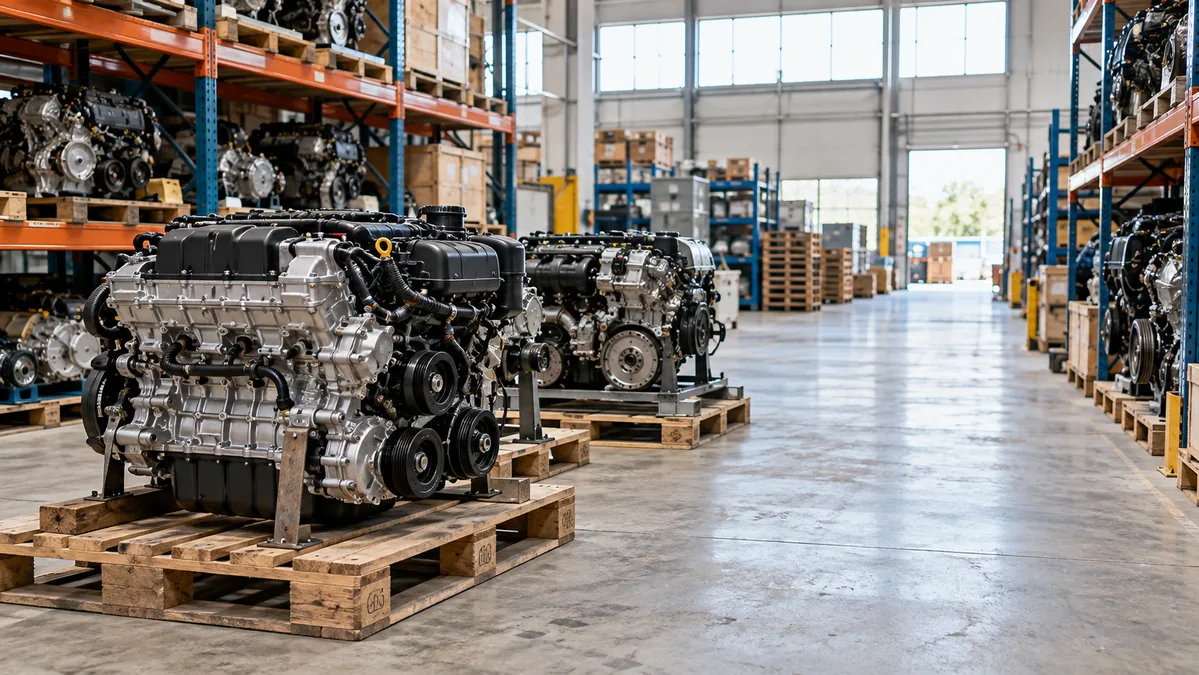
This guide starts after the shipment has arrived and the buyer has completed the initial receiving review. It covers where to keep the engine or its shipment packaging while it waits for installation, resale, distribution or another planned step. It does not replace the receiving inspection, package markings or product-specific storage directions.
Keep those stages separate. First, compare the shipment with the order and record visible discrepancies; the replacement engine receiving inspection checklist covers that handover. Then confirm how the specific engine should be stored. A guide to engine storage before shipment concerns the supplier’s preparation stage and should not be assumed to describe conditions after delivery.
Which Storage Action Fits the Shipment Condition?
Use this table to decide what to check next. It is a buyer-side recordkeeping aid, not an engine preservation specification. When a product instruction, shipping mark or contract gives a more specific direction, follow it and clarify anything that is unclear.
| What you see | Buyer check | Next step |
|---|---|---|
| Crate or pallet is intact | Confirm it is stable, supported and identified with the correct order record. | Keep it in the designated area and retain the packing documents. |
| Packaging is open or removed | Check who opened it and whether the supplier provided handling or protection instructions. | Ask the supplier what protection and support to use before changing the setup. |
| Moisture, impact or displacement is visible | Record the condition with dated photos and keep order and delivery references together. | Contact the carrier or supplier under the order process before moving or altering the cargo. |
| Storage duration or environment is uncertain | Identify the product form, packaging state and expected storage period. | Request written, product-specific instructions from the supplier. |
What Should a Warehouse Checklist Include?
Assign one person to own the storage record and attach it to the purchase order or receiving file. Mark each point confirmed, open or not applicable rather than relying on memory.
- Match the order: Record the order reference, supplier, engine code or agreed identifier, product form, quantity and date received. Do not infer a model or configuration from a generic crate.
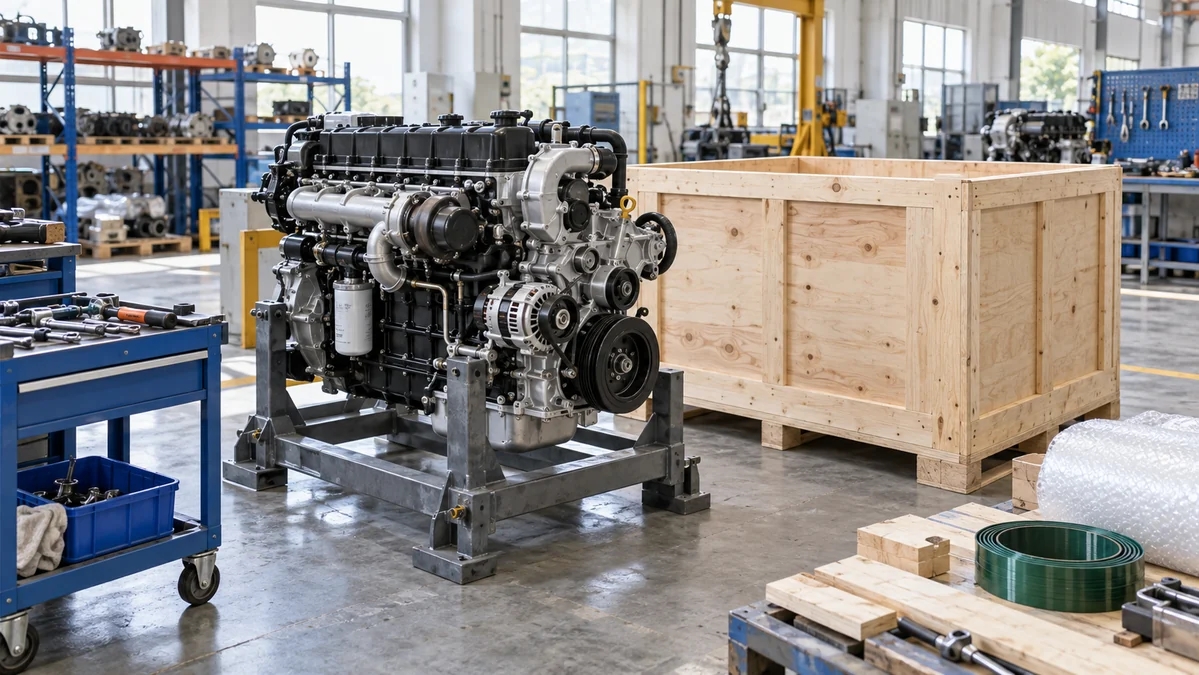
- Keep the base stable: Confirm that the engine, crate or pallet is supported as delivered and sits flat in its designated location. Do not stack other cargo on it unless package markings and supplier instructions explicitly allow that arrangement.
- Choose a suitable area: Use a clean indoor location away from standing water, routine vehicle traffic and likely impact. Apply your site’s environmental and safety rules, and ask the supplier about engine-specific limits.
- Preserve identification: Keep crate marks, order references and the receiving record associated with the same unit. If you use an internal stock label, do not cover or replace original identification.
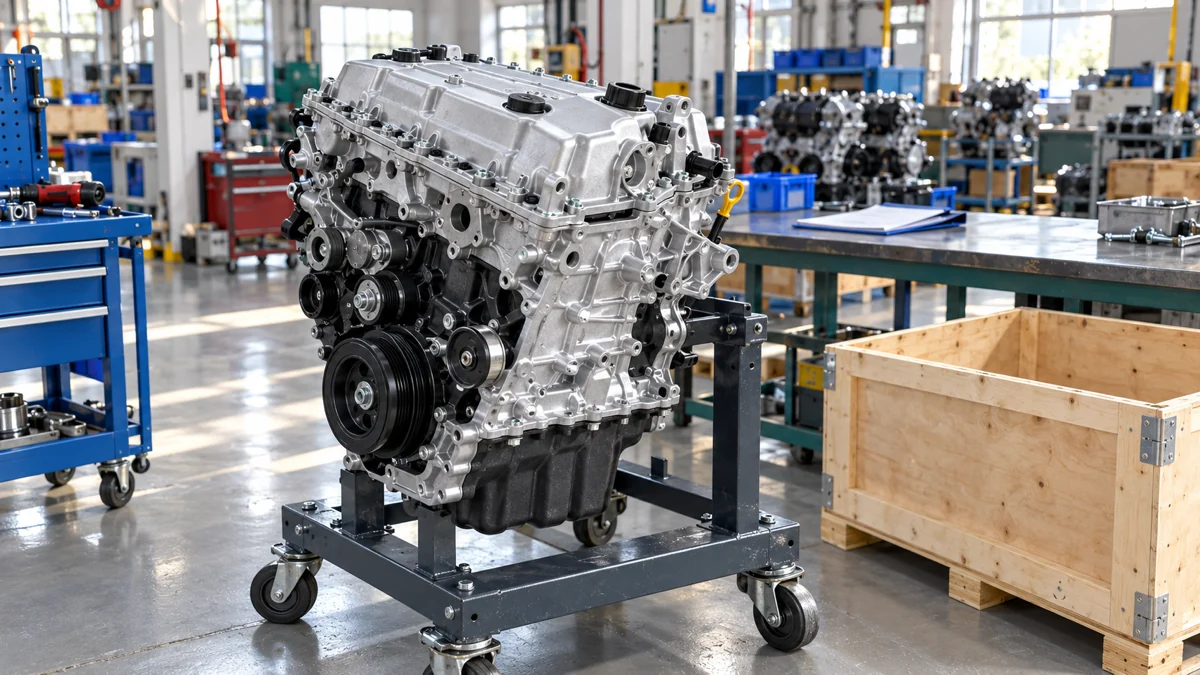
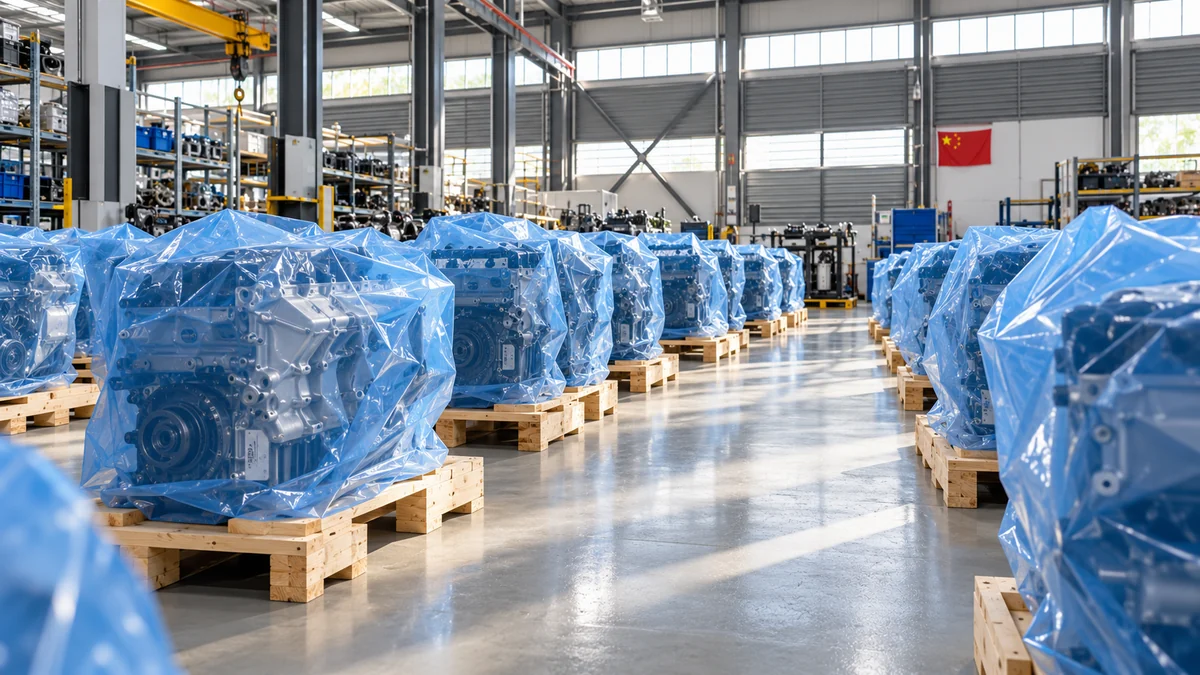
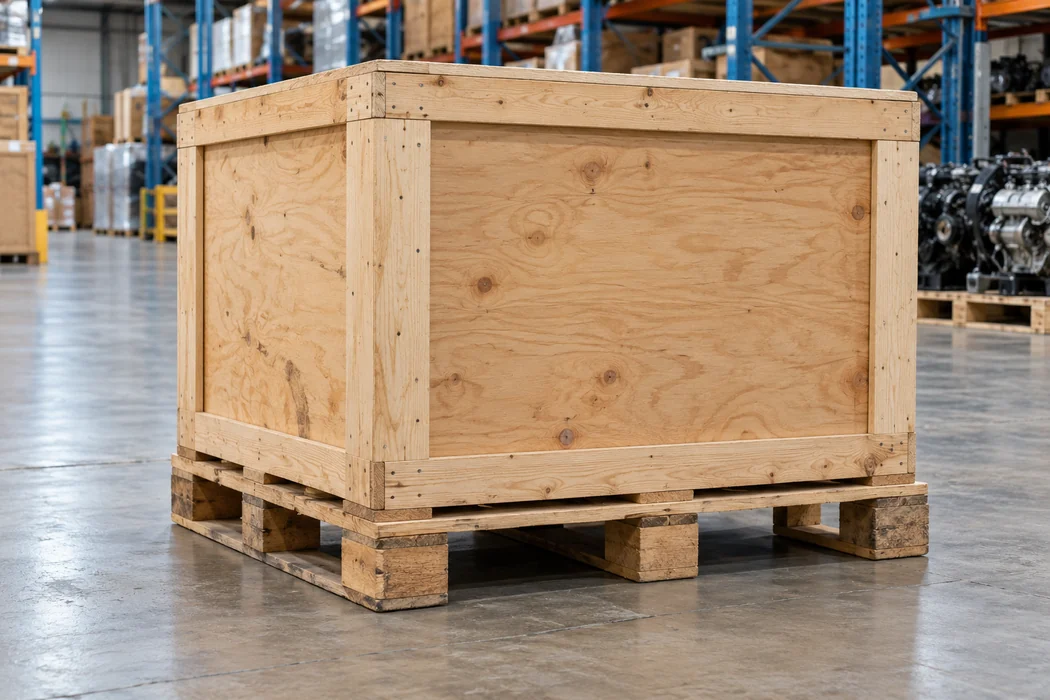
- Respect protective materials: Keep the delivered packaging in place when practical. Before opening a sealed crate, removing a cover, exposing ports or applying any treatment, confirm the action with the supplier’s written instructions for that product.
- Control access and movement: Identify who may move the unit and which handling method is approved. Keep a clear route around the storage position and record any transfer to another bay or warehouse.
- Keep records together: File receiving photos, packing information, invoice or packing list, storage directions and later clarifications under one order reference. The engine shipping documents guide explains common records buyers may receive.
- Review condition on a defined schedule: Set a check interval that fits your warehouse process and the supplier’s guidance. Record the date, person checking and any visible change; no single inspection frequency applies to every engine.
How Should Buyers Organize the Storage Location?
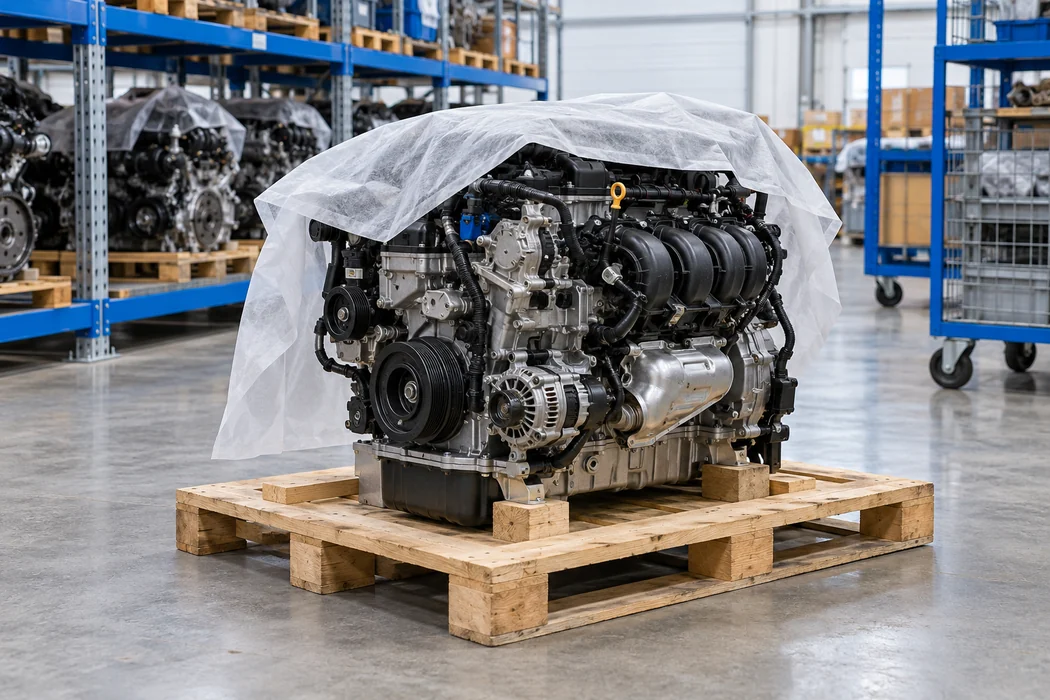
Keep each delivered unit traceable to its own order. A simple location record can include the warehouse bay, pallet or crate reference, order number, received date, current packaging state and the person responsible for access. For mixed-model inventory, keep internal labels linked to the supplier’s original marks instead of making them the only source of identification.
Leave the engine supported in the configuration supplied until a qualified handler follows the agreed movement instructions. Avoid placing loose goods on the engine or crate. If a crate must be moved, check its markings and the warehouse’s approved lifting method first. For order preparation and packaging questions, see the guide to engine packaging for international shipping and the notes on neutral engine packing and labeling.
What Is a Practical Buyer Workflow After Arrival?
- Complete receiving: Compare the shipment to the order and record the arrival condition before changing the packaging or location.
- Confirm instructions: Ask the supplier about product-specific storage, packaging and handling directions if they are missing or unclear.
- Assign a location: Put the unit in a stable, clean indoor area and record its exact warehouse position and responsible contact.
- Preserve evidence: Keep photos, shipping marks and order documents together; document any transfer or visible change.
- Review before use or resale: Recheck the unit’s identity and agreed configuration against the order record before it leaves storage.
How Can NANXI POWER Support Storage Planning?
For an international engine order, NANXI POWER can discuss export-oriented packing and shipping marks, coordinate relevant shipment documentation such as a commercial invoice or packing list when applicable, and support logistics coordination by reviewing available shipping options for the destination. Buyers can share the engine code or agreed product reference, product form, delivery country and receiving plan so the order-specific packing and paperwork can be clarified before shipment. Storage directions depend on the actual product and packaging, so request written instructions for the unit rather than relying on a general guide.
Frequently Asked Questions
Can every replacement engine be stored in the same way?
No. Storage directions can depend on the specific engine, packaging and order. Ask the supplier for written instructions that match the delivered product.
Should I remove the crate or protective cover after delivery?
Only after checking the supplier’s instructions and the shipment condition. If the directions are unclear, keep the packaging in place when practical and request written guidance before opening or changing it.
Can I stack other goods on an engine crate?
Do not assume that stacking is allowed. Check package markings and supplier instructions; if they do not clearly permit it, keep the area above the crate clear.
What should I record while an engine is in storage?
Keep the order reference, product identifier, storage location, packaging state, receiving photos and supplier instructions together. Record moves and visible condition changes under the same order file.
What should I do if I find moisture or impact damage?
Take dated photos, preserve delivery and order references, and contact the supplier or carrier under the applicable process. Ask before moving or altering the cargo if that could affect condition evidence.
Plan the Next Engine Order Clearly
Share the engine code or agreed product reference, product form, quantity, delivery country and intended receiving setup through Contact NANXI POWER, WhatsApp or Email. Visit our Made-in-China store, Alibaba.com International store or LinkedIn page.