Quick Answer
Cruze PCV diagnosis on the listed LUJ/LUV 1.4T engines should distinguish the pressure-control diaphragm in the camshaft cover from the non-return valve inside the intake manifold. A diaphragm fault can accompany P0171 and rough idle; a missing manifold valve can contribute to oil consumption or leaks. Confirm the fault before ordering a cover, manifold or replacement engine. The checks below concern the listed GM applications, not every Cruze engine.
An overseas buyer may receive three descriptions of one complaint: “the engine whistles,” “the scanner shows P0171,” and “it is using oil.” Keep those observations separate. They do not identify one failed part or establish that the engine needs replacement. A workshop report should connect each proposed repair to an actual finding.
Which Cruze engines do these checks cover?
This article focuses on the Chevrolet Cruze applications with the 1.4L LUJ or LUV engine listed in GM’s cited publications. Bulletin 19-NA-114 lists 2011–2016 Cruze in North America. The July 2024 revision of 19-NA-101 lists the same Cruze years and covers North America and Israel. Confirm the actual engine and vehicle against current GM service information before applying either procedure.
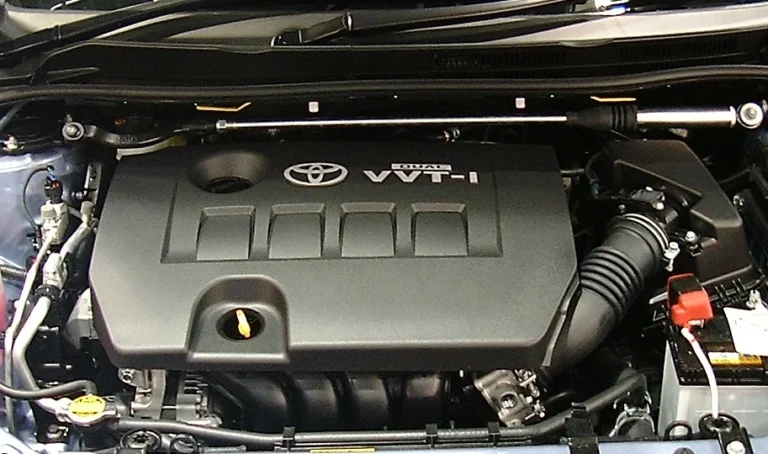
A model year or “1.4 turbo” description is insufficient for a parts order. Send the VIN, engine identification and market details together; our engine code and engine number guide explains what to collect. Do not extend this article to the LE2, a 1.6L or 1.8L engine, or another market solely because the vehicle carries the Cruze name.
Why are two different components called “the PCV valve”?
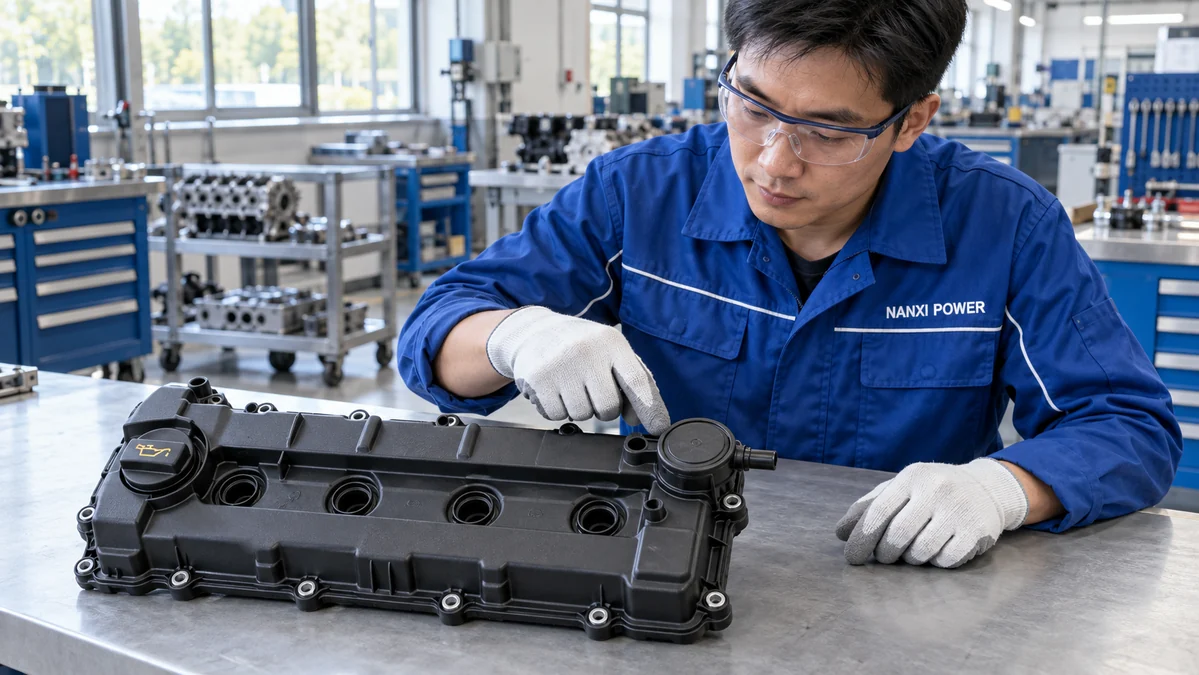
PCV means positive crankcase ventilation. For this diagnosis, identify the component by both its function and its location. The pressure-control diaphragm belongs to the camshaft cover, often called the valve cover. The non-return valve is inside the intake manifold. A request for “a PCV valve” leaves the supplier without enough information to identify which assembly the workshop means.
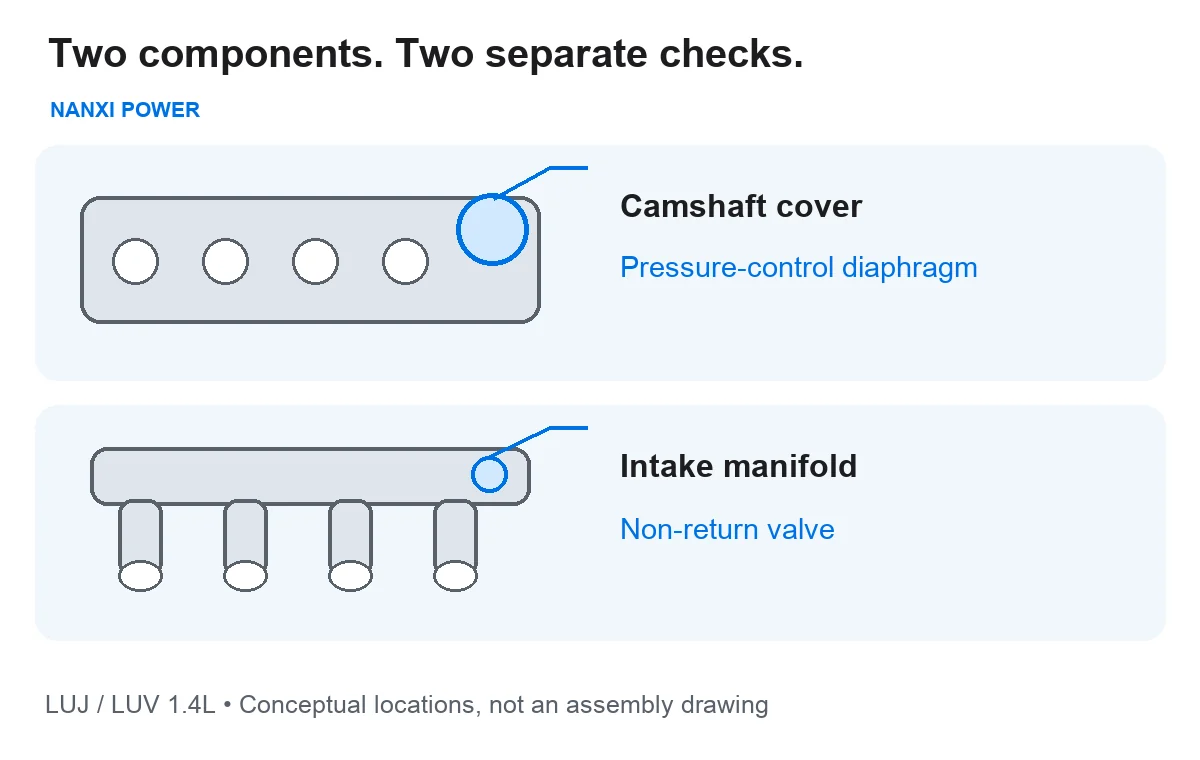
Use two separate lines on the job record: cover diaphragm findings and manifold non-return-valve findings. Mark an unperformed check as “not checked.” This avoids turning silence in a report into an assumption that a component passed inspection.
What supports a camshaft-cover diaphragm diagnosis?
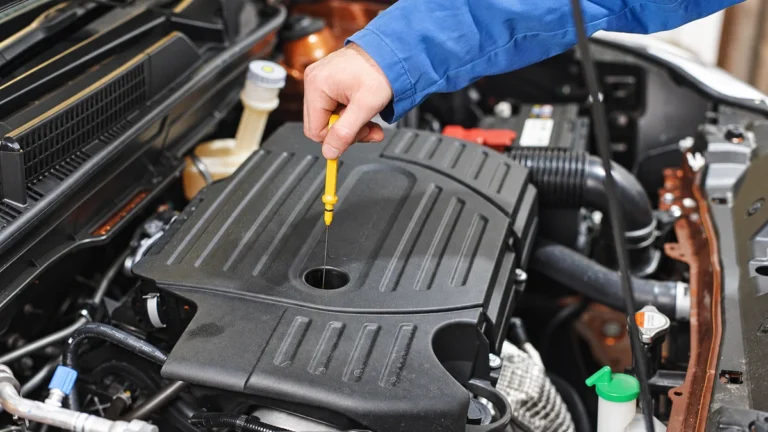
GM 19-NA-114 requires confirmation before cover replacement. In its professional workshop procedure, the oil cap is tightened and the dipstick seated before the running-engine noise check. If removing the dipstick reduces the noise, the technician then reseats it. The bulletin also checks the small PCV vent with tissue: flutter can occur normally; tissue held against the vent indicates vacuum leakage. Noise together with vent vacuum leads to camshaft-cover replacement under that procedure. If the specified fault is absent, continue the vehicle’s diagnostic process.
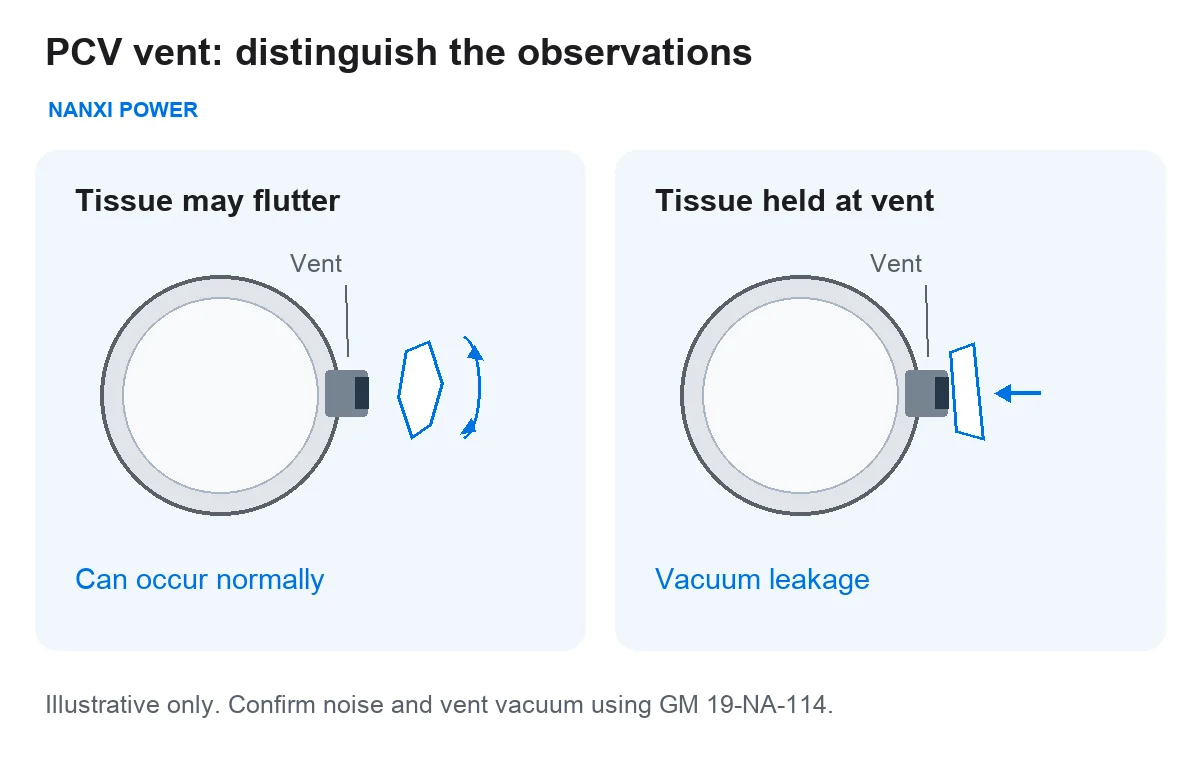
Record both observations rather than reporting only “PCV bad.” P0171 is a fuel-trim lean code, not proof of a defective cover. These are workshop checks requiring the vehicle’s service instructions and appropriate access precautions; they are not instructions to block the vent or modify the ventilation system.
What changes when the complaint includes oil loss?
Use the separate inspection in GM 19-NA-101, July 2024. It links a missing manifold non-return valve with increased crankcase pressure and oil entering the induction system. The technician separates the PCV bypass pipe at the manifold to inspect for the valve. Its orange feature may be obscured by deposits, so color alone is not the decision. A confirmed missing valve calls for manifold replacement. A visible valve nipple means no manifold repair under that check; oil-consumption diagnosis continues through GM service information.
Request a view of the inspected opening and a wider photograph showing where it is on the assembly. A close-up without orientation can be difficult for a remote buyer to interpret. Record an obstructed view as inconclusive rather than calling the valve missing. Do not substitute the generic spring-and-plunger PCV illustrations found online for this component’s actual design.
What should a buyer confirm before ordering parts or an engine?
Ask the workshop to name the failed assembly and attach its evidence before requesting a quotation. The following table organizes the purchasing decision; it adds no new repair thresholds.
| Workshop report | Purchasing response |
|---|---|
| A code or noise description only | Request the component checks and written conclusion before authorizing a parts order. |
| A confirmed cover or manifold finding | Identify the exact assembly through the VIN and current parts information. |
| Symptoms remain after a repair | Obtain the follow-up diagnostic report before repeating the same purchase. |
| The workshop proposes engine replacement | Request the evidence supporting that larger scope and a list of parts proposed for reuse. |
Keep a compact evidence folder with the vehicle identity, fault-code report, conditions when the symptom occurs, relevant photographs and the technician’s conclusion. If oil consumption is reported, include the workshop’s measured record and measurement method. Record which cover, manifold and hoses are currently fitted, especially after earlier repairs. A later supplier should be able to understand the current configuration without reconstructing it from chat messages.
GM’s N202299080 document directs dealers to use the VIN and electronic parts catalog to identify the camshaft-cover assembly. Its special-coverage conditions are separate from technical diagnosis; this article establishes no current warranty entitlement. For the wider purchasing decision, see our repair-or-replace guide.
If replacement is justified, specify which external parts are included and which will be transferred. Put the manifold, cover, ventilation connections and other retained accessories on that list. Our engine accessory configuration guide helps document the supplied scope. An engine quotation should not leave the condition or inclusion of those parts implicit.
How can NANXI POWER support a clearer replacement inquiry?
NANXI POWER can help review the engine code, VIN and original engine photos, clarify the requested configuration and included accessories, and provide pre-shipment photos or videos for comparison. Send the workshop’s diagnosis with the inquiry, identifying the cover and manifold parts intended for reuse. This gives the buyer and supplier a clearer basis for confirming the requested assembly. The workshop remains responsible for the vehicle diagnosis and approval of transferred components.
Frequently asked questions
Does P0171 mean I need a replacement engine?
No. The code alone does not establish internal engine damage. Obtain a diagnosis that explains the proposed repair scope.
Does replacing the cover also replace the manifold valve?
No. They belong to different assemblies. The order and workshop report should identify each separately.
Can I order by a photograph and the words “Cruze 1.4”?
Use the photograph with the VIN, engine identity and current parts information. A visual resemblance is insufficient to approve the order.
Manufacturer references and image notes
GM 19-NA-114, May 2019: P0171 and the cover diaphragm; GM 19-NA-101, July 2024: oil consumption/leaks and the manifold valve; GM N202299080, July 2020: camshaft-cover identification and stated coverage conditions. Consult current vehicle-specific information for repair work.
The original schematics simplify the two inspection subjects; they show no installation dimensions or test limits. The cover scene is an editorial illustration, not a photograph of a particular LUJ/LUV assembly or a documented factory inspection.
Send the diagnosis with your engine inquiry
Include the VIN, engine code, original photos, workshop conclusion, required assembly, retained accessories, quantity and delivery country.