Quick Answer
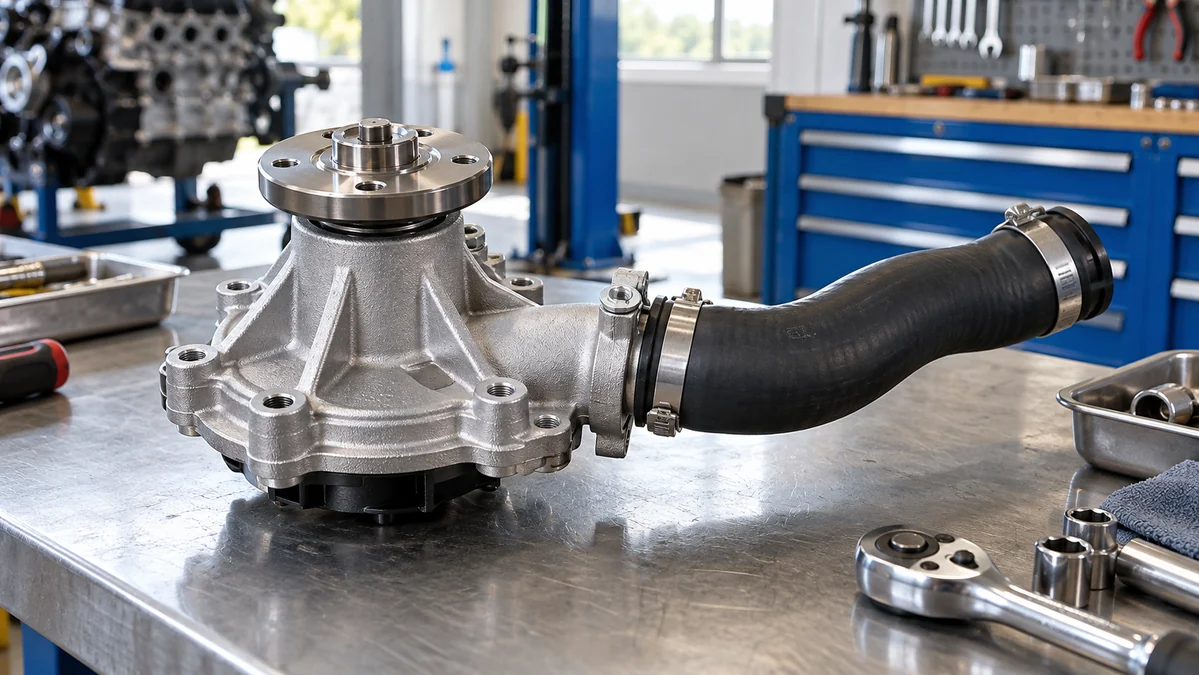
Cruze coolant leak diagnosis should distinguish a small dry stain from an obvious pump leak. For the 1.4L LUJ/LUV vehicles described in GM 14371B, slight staining without an obvious leak does not justify replacing the pump. Visible leakage or substantial deposits follows a different repair branch. First identify the engine, then examine the pump and establish where the fluid begins.
“Coolant around the water pump” leaves an important question unanswered: is the workshop looking at an old trace, heavy residue, or fresh liquid? Ask that question before approving a repair. The result is more useful than simply hearing that the engine is losing coolant.
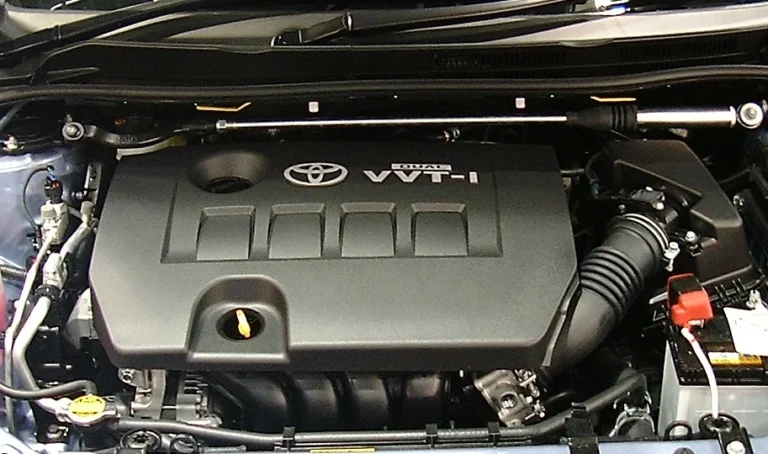
Engine scope: The GM example below concerns certain 2011–2014 Cruze vehicles with the 1.4L LUJ or LUV engine. Other engines need their own service information. Use the VIN and actual engine identification together; see the engine code and engine number guide.
A stain, a deposit and a fresh leak mean different things
GM’s bulletin includes photographs of acceptable light staining and excessive deposits. Compare the actual component with those manufacturer examples, rather than trying to judge it from a generic engine photograph.
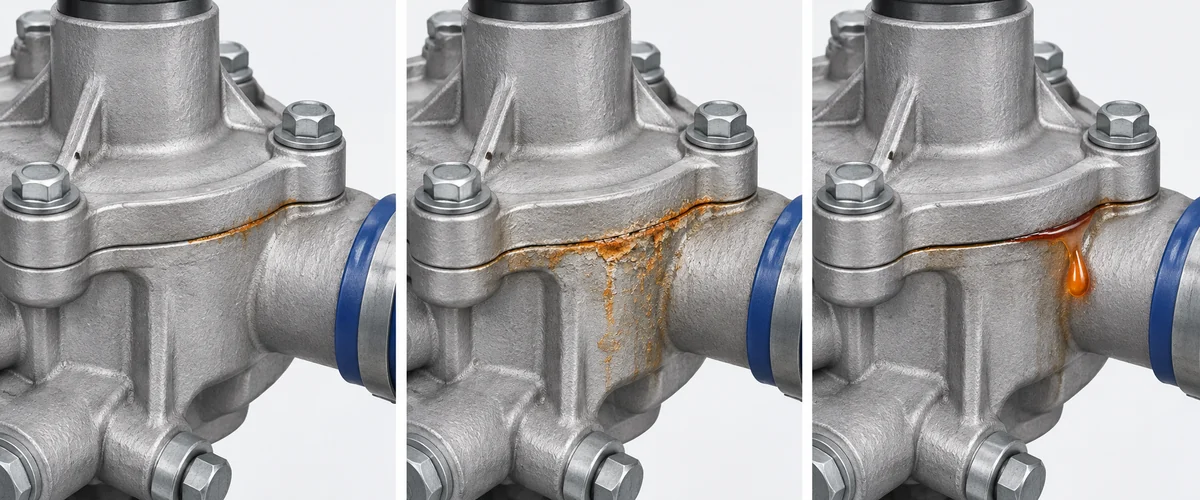
1. A small dry trace, with no obvious pump leak
Do not replace the pump solely for this appearance. A small mark is insufficient evidence for a pump order. If the vehicle still loses coolant, the source remains to be established through the vehicle’s diagnostic process.
2. Substantial deposits on the pump
This is different from a faint stain. GM’s examples show conspicuous residue on the cover plate or housing. The bulletin places excessive evidence of leakage in its replacement branch. It gives visual comparisons, not a universal stain diameter or residue thickness.
3. Fresh coolant visibly escaping from the pump
An obvious pump leak also belongs in that repair branch. Follow current vehicle-specific service instructions for replacement. A puddle beneath the vehicle, without an identified source, does not establish this finding.
Use this inspection order to avoid replacing the nearest wet part
- Make the vehicle safe to inspect. If it overheats, stop safely and follow the owner’s instructions. Never open a hot pressurized cooling system.
- Separate the complaint from the finding. Record the warning, coolant loss and repair history. Then write down what the technician actually sees.
- Show the location before the close-up. Take an orientation photograph of the assembly, then a detail of the wet area or residue. A tight crop alone can hide where fluid has traveled from.
- Name the starting point. If the source is obscured or not confirmed, say so. Continue diagnosis rather than assigning the leak to the component nearest the stain.
- Choose the repair from the confirmed finding. State whether it is slight staining, substantial residue or an obvious leak, and identify the relevant manufacturer’s repair branch.
A useful workshop conclusion is short: which component was inspected, what was found, and why that supports the proposed work. An unconfirmed source should remain an open diagnostic question.
The pump seal and the housing joint are separate inspection subjects
The pump’s shaft seal and the joint between the pump housing and engine front cover are different locations. GM 14371B discusses pump leakage; the separate PIE0275 investigation considered a housing-joint gasket on specified US-market 2013 Cruze/Sonic LUV vehicles. A wet pump area does not by itself tell you which sealing location is responsible.
Use the exact component name in the job record. “Water-pump area wet” is an observation; “housing-joint leak confirmed” is a conclusion that needs supporting inspection. PIE0275 was a defined engineering investigation, so use current service information for the actual vehicle rather than treating it as a universal repair instruction.
If the leak appeared after an engine change, what was transferred?
Compare the installation record with the supplied assembly. Were the pump, housings, hoses and related components included, or transferred from the vehicle? The engine accessory configuration guide helps identify those boundaries.
A replacement engine does not establish the condition of a reused external part. Equally, a leak after installation does not by itself establish which party caused it. The technician should identify the failed location and assess any transferred components before deciding on further work.
If overheating led to the original engine replacement, ask what was done to address the diagnosed cooling-system fault. When the workshop proposes another engine, request the findings that justify that larger repair. The repair-or-replace guide explains that decision.
What should the finished repair record contain?
- The confirmed leak location and photographs that show both orientation and detail.
- The repaired or replaced component, with the reason for that work.
- The vehicle-specific service instructions used, including any fastener replacement requirements.
- The result of the workshop’s post-repair checks, rather than an unsupported “all good.”
Do not copy torque values, fill quantities or bleeding instructions from another engine. Those details belong to the exact vehicle’s service procedure.
NANXI POWER: confirming the engine and reused accessories
NANXI POWER can help review the engine code, VIN and original-engine photos, confirm the configuration and included accessories, and provide pre-shipment photos or video. Send the confirmed workshop finding and identify the parts intended for reuse. This lets the quotation address the required assembly clearly while the workshop retains responsibility for diagnosis and repair.
Manufacturer examples and scope
GM 14371B, January 2015, pages 2–4: actual pump appearance examples; GM PIE0275, December 2013: specified pump-gasket investigation. Historical special coverage is separate from diagnosis; ask a GM dealer to check the VIN and current eligibility.
Discuss the required engine assembly
Send the VIN, engine code, original photos, workshop conclusion, accessory list, quantity and delivery country.