Quick Answer
Valve cover engine version differences can support replacement-engine identification, but the cover is only one clue. Buyers should photograph the complete valve cover, oil-filler position, ventilation connections, coil or injector areas and surrounding interfaces. Final confirmation should also use the engine code, VIN-assisted identification, transmission, drivetrain and wider original-engine photos.
Why the Valve Cover Is Useful
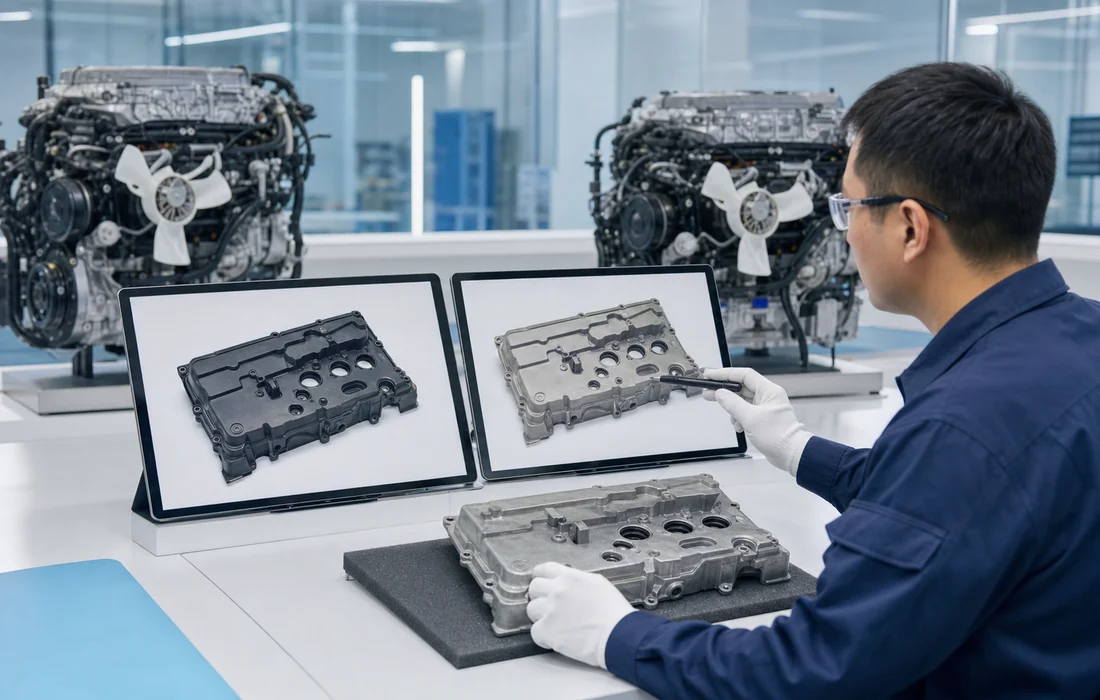
The valve cover occupies a visible position at the top of the engine, so it often appears in workshop and buyer photos. Its outline and external connections can provide a quick visual reference when a sales or technical team compares the original engine with an offered unit.
However, covers can be replaced during service, and engines sharing a general family can use different top-side arrangements. A matching cover does not prove that every internal or external configuration is correct. A different cover also does not automatically mean that the engine core is unsuitable. The complete version must be checked.
Valve Cover Details to Photograph
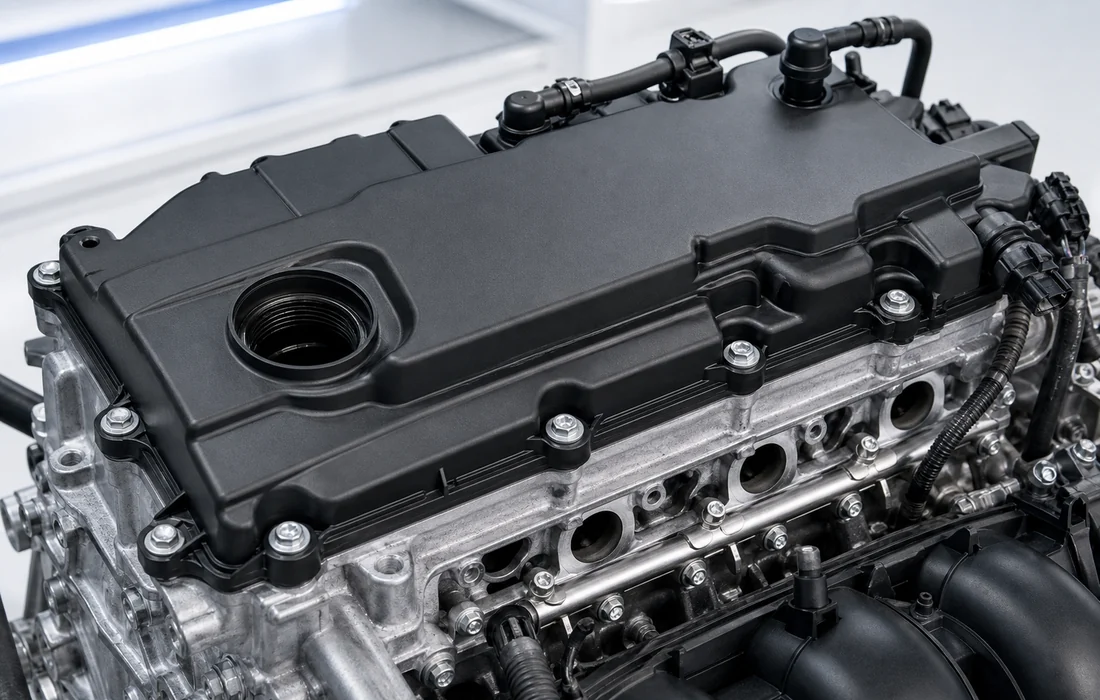
Start with one square photo showing the entire cover and its position on the engine. Then add closer images of visible connections. Do not photograph only a logo, color or small corner.
Record the complete shape, height and relationship to the timing side.
Show the oil-filler position and visible ventilation, hose or wiring connections.
Include coil, injector, intake-side and timing-side areas when visible.
Do Not Identify an Engine by Cover Material Alone
Buyers sometimes describe an engine only as having a plastic or metal cover. That distinction can be helpful, but it is too broad for final identification. The same general material can appear across different designs, and a service replacement may not match the original production appearance.
Use material, shape and external connections as a combined visual reference. Then compare the engine code and other structural details. The engine code and engine number guide explains why markings and photos should be sent together.
Compare Photos from Similar Angles
A useful comparison requires consistent viewpoints. If the original-engine photo is taken from the timing side, request a similar view of the offered engine. If one image is a top-down view and the other is taken from a low angle, important differences can be hidden.
- Photograph the complete top of the original engine.
- Add timing-side, intake-side and exhaust-side views.
- Include the engine code marking or identification plate.
- Request current offered-engine photos from comparable angles.
- Keep original files so details remain sharp when enlarged.
Add the Configuration Details That Photos Cannot Show
Photos cannot reliably communicate every production or vehicle detail. Buyers should also provide the VIN, vehicle model, production year, transmission type and drivetrain. State whether the inquiry is for a complete engine, long block, base engine or short block.
The exact external accessories must be confirmed separately. A visually similar valve cover does not confirm that wiring, sensors, manifolds, injectors, turbocharger or other bolt-on parts are included. Those items belong in the quotation and product-photo record.
Build a Version-Confirmation Record
Send these items in one inquiry
- Typed engine code and a clear marking photo
- VIN for preliminary identification
- Complete valve-cover and top-side photos
- Timing, intake, exhaust, oil-pan and mounting-side photos
- Transmission and drivetrain details
- Required product form, quantity and destination
This record gives the supplier a practical basis for checking the offered configuration. Buyers can review available engine families in the NANXI POWER engine catalogue and follow the engine supply process from identification through shipment preparation.
Frequently Asked Questions
Can a valve cover confirm the engine version by itself?
No. It is one visual clue. Final checking should also use the engine code, VIN-assisted identification, wider photos, transmission and drivetrain.
Does a different cover always mean a different engine?
Not always. Covers may change by version or may have been replaced during service. Compare the complete engine configuration before reaching a conclusion.
Should buyers send photos with the decorative engine cover installed?
If it can be safely removed, photograph the functional valve-cover area beneath it as well. Do not remove components without suitable workshop knowledge.
Does the valve cover photo confirm included accessories?
No. Included accessories must be itemized in the quotation and confirmed with current product photos.
Send the Full Top-Side Photo Set
Share the engine code, VIN, complete valve-cover view and matching side photos. NANXI POWER can use the visible details for preliminary version checking before quotation.
See product and inspection visuals on the official NANXI POWER YouTube.