Quick Answer
Oil pan configuration matters because the lower shape, sump position, mounting clearance and related pickup arrangement can differ between engine versions. Two engines can share a code yet have different underbody clearance or drivetrain requirements. Before quotation, send a clear underside photo and identify the transmission and drivetrain.
The Oil Pan Is More Than a Cover
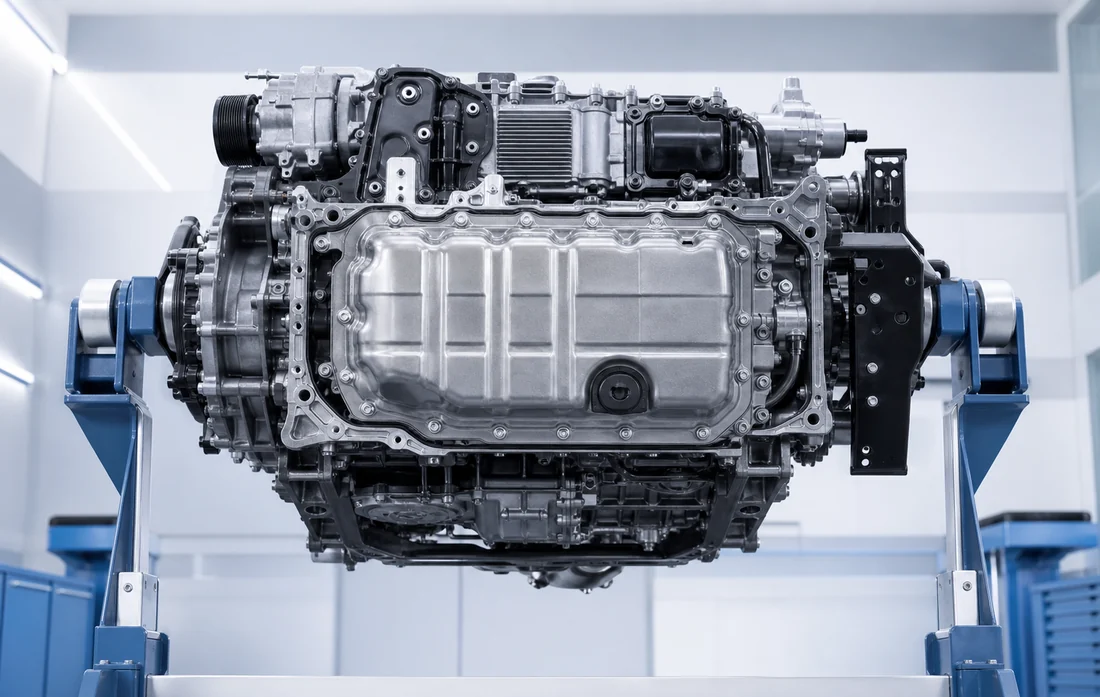
From a purchasing desk, the bottom of an engine can look like a minor detail. In a workshop, it is part of the physical package that must clear the vehicle structure and work with the correct installation layout.
The visible pan shape can help distinguish versions, but it should be used as one comparison point rather than a complete compatibility decision. The oil pickup and internal arrangement also need to match the selected configuration; those details should not be inferred from an exterior photograph alone.
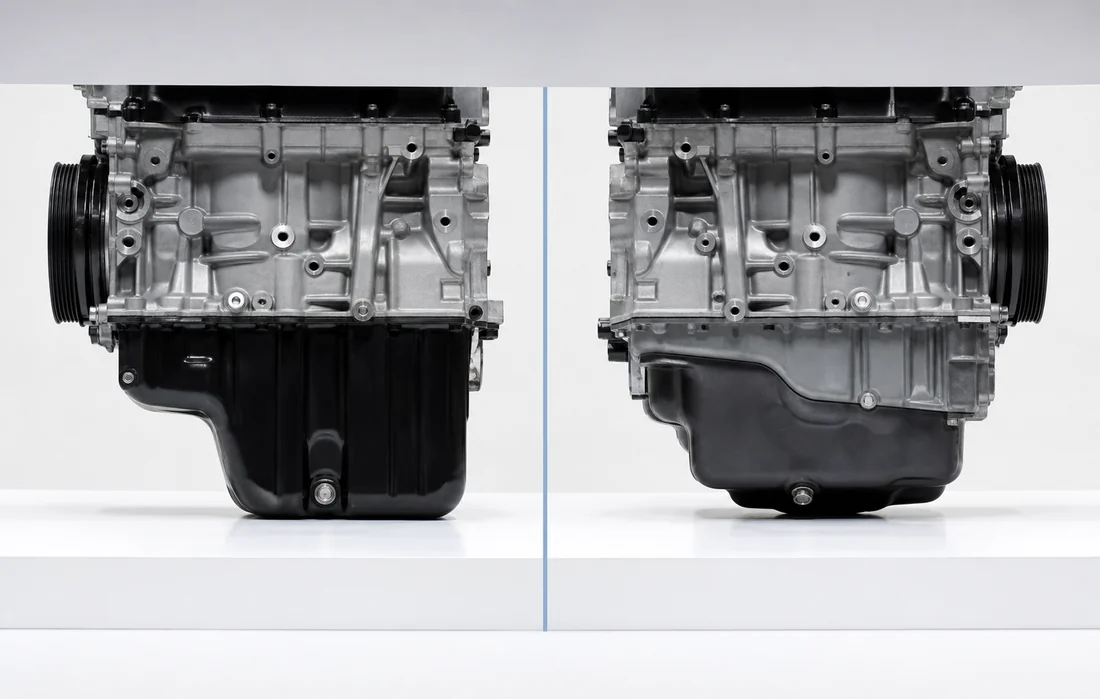
Why the Same Engine Code May Show Different Pan Shapes
An engine family may appear in more than one vehicle platform or drivetrain layout. Packaging space, crossmember clearance and installation orientation can lead to different lower configurations. Market and production changes may add another layer of variation.
This is one reason NANXI POWER requests more than a typed engine code. The original engine remains the most useful visual reference. Start with the relevant family in the engine series catalogue, then compare the requested version with the actual unit being replaced.
Three Views That Make the Comparison Useful
Show the complete pan shape and its position relative to the block.
Show the depth, stepped sections and surrounding mounting areas.
When possible, show nearby clearance and the installation orientation.
Keep the camera level and include enough surrounding structure to show which end of the engine is being photographed. Close-ups without orientation can be difficult to compare.
Drivetrain and Transmission Belong in the Same Conversation
FWD, RWD, AWD and 4WD layouts can place different constraints around the lower engine area. Automatic and manual applications may also use different adjacent components or interfaces. The oil pan photo therefore becomes more useful when it is paired with drivetrain and transmission information.
Do not assume that a matching code means the original pan can always be transferred without checking. The quotation and product photos should identify the supplied form and the agreed configuration.
Check the Product Form Before Discussing Included Parts
A complete engine, long block, base engine and short block are different product forms. The oil pan may be present, absent or configuration-dependent according to the specific quotation. No product name should be used as a shortcut for an unconfirmed accessory list.
Ask the quotation to show
- The exact product form being supplied
- Whether the oil pan is included in that quoted unit
- Clear photos of the actual configuration
- Any parts expected to be transferred from the original engine
- Items that are specifically excluded
A Practical Pre-Quotation Checklist
- Original engine code and VIN
- Full underside and side-profile photos
- Vehicle market and available model information
- Automatic or manual transmission
- FWD, RWD, AWD or 4WD
- Photos of mounting points and external interfaces
- Required engine product form
See the NANXI POWER supply process for the broader confirmation workflow. Packing and inspection records are discussed on the quality information page; specific terms still depend on the product and agreement.
For visual product and inspection content, visit the official NANXI POWER YouTube channel.
Frequently Asked Questions
Can two engines with the same code use different oil pans?
Yes, version differences can exist. Compare the original unit’s underside, drivetrain, transmission and installation layout before quotation.
Is an oil pan automatically included with every long block?
No. Inclusion depends on the quoted configuration. Confirm it through the quotation and product photos.
Can I identify the correct version from the oil pan alone?
No. The pan shape is one useful clue. Engine code, VIN-assisted identification and multiple engine views are still needed.
Should I measure the oil pan?
Photos are the normal starting point. If the visual comparison is inconclusive, the supplier may request specific measurements from clearly defined reference points.
Show Us the Engine From Below
Send the engine code, underside photos, transmission and drivetrain. Clear lower-engine views help narrow the configuration before quotation.