Quick Answer
Automatic vs manual transmission information should be stated in every replacement-engine inquiry. The transmission type can affect the engine-side interfaces, flywheel or flexplate requirements, related sensors and the parts expected to transfer from the original unit. It is not enough to send only the engine code.
Why the Supplier Asks About the Transmission
An engine is ordered as part of a vehicle system, even when the transmission is not included in the purchase. The connection between them needs to be understood before the engine configuration is finalized.
The question “automatic or manual?” is therefore a version check, not an attempt to sell a transmission. It helps the supplier interpret photos, compare external interfaces and describe which parts are included with the quoted engine.
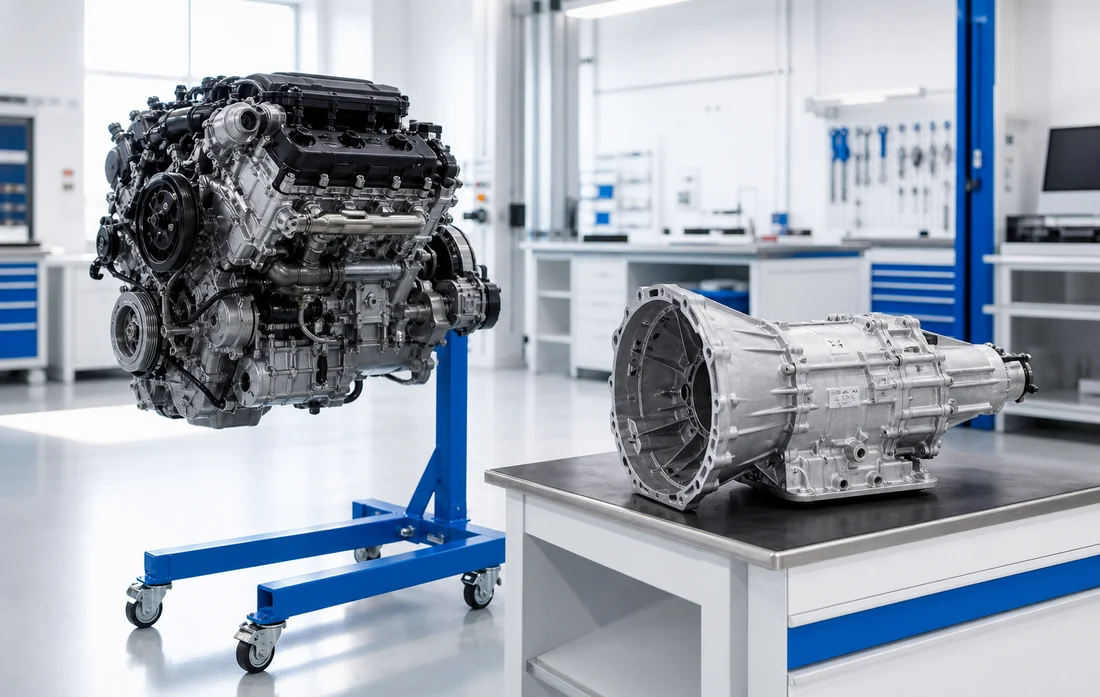
The Engine Code Does Not Always Close the Question
A shared engine code can appear across different vehicle versions. Transmission, drivetrain, model year and destination market may change adjacent components or installation details. Treat the code as the first filter and the vehicle configuration as the second.
Browse the appropriate family in the engine series catalogue, but use the original unit and vehicle information for the actual quotation.
What Buyers Should Photograph
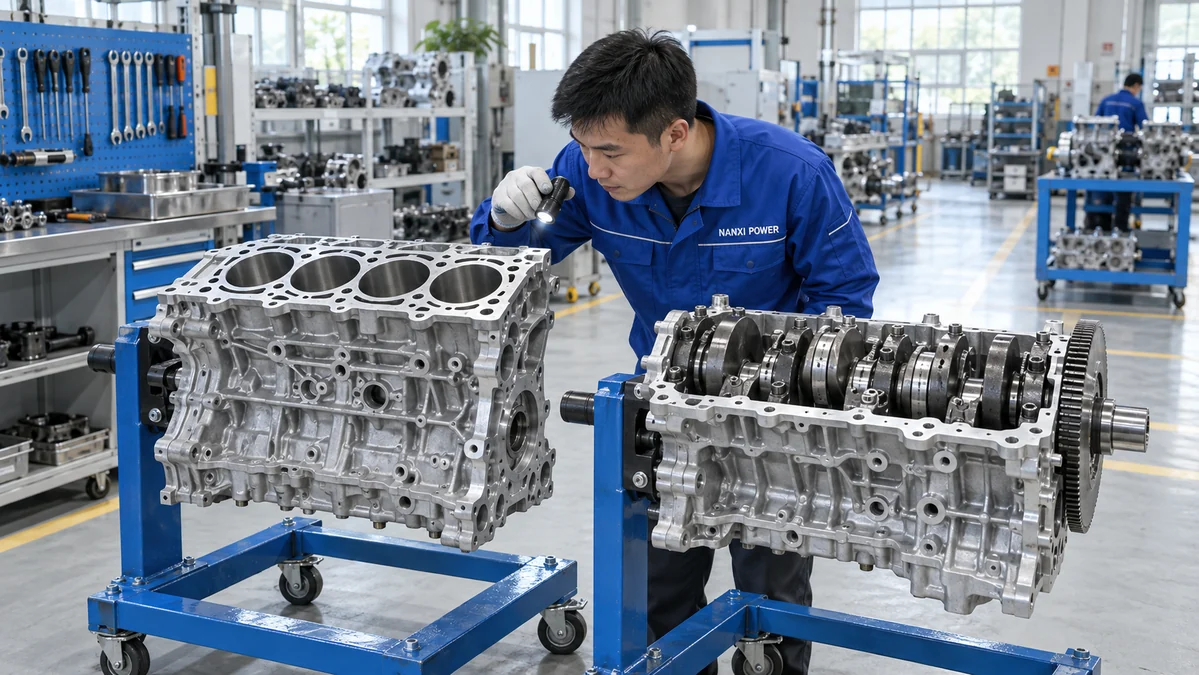
Send a clear view of the transmission side of the original engine, including the mating area and any visible plate, wheel or related interface. A wider image should show orientation; close images should show bolt patterns and nearby sensors without cropping away the context.
Photograph the complete rear face of the engine and the surrounding interfaces.
State automatic or manual and include its available identification details.
Confirm FWD, RWD, AWD or 4WD rather than relying on the vehicle name alone.
Show the flywheel, flexplate or adjacent parts if they are visible and relevant.
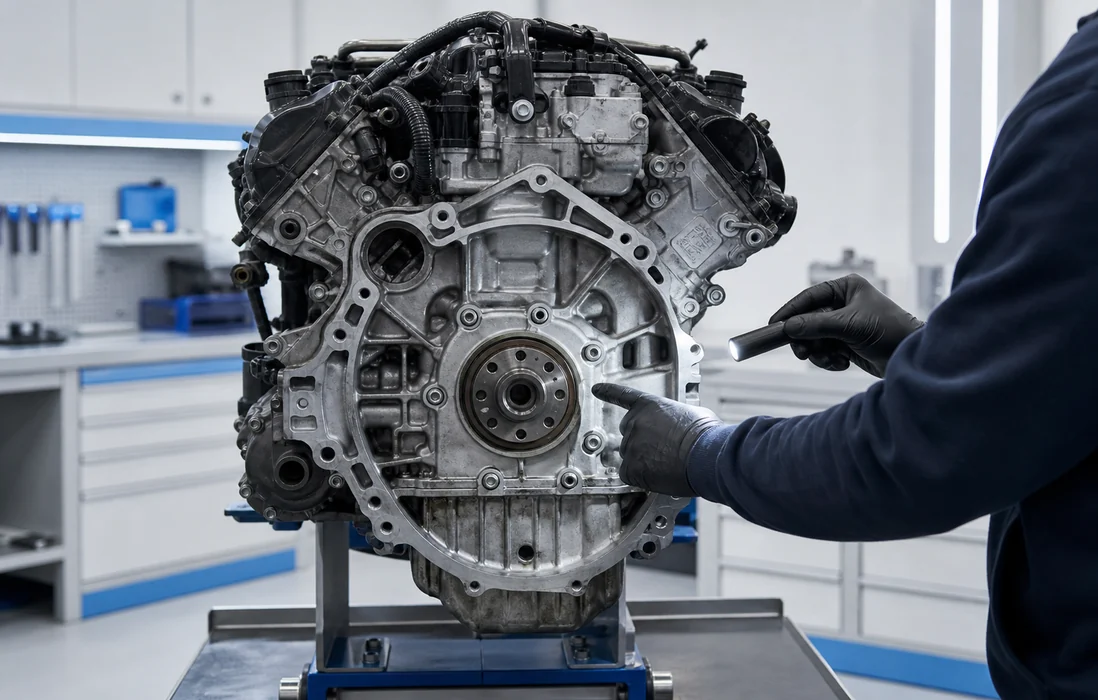
Flywheel and Flexplate Expectations Need Written Confirmation
A manual application commonly uses a flywheel, while an automatic application commonly uses a flexplate or related automatic-transmission interface. The exact supplied parts must still be confirmed for the quoted product.
Do not assume that “complete engine” automatically includes every connection component. Likewise, do not assume that a long block arrives ready to connect without transferring selected parts. The quotation, product photos and commercial agreement should describe the final scope.
Separate the Engine Form From the Vehicle Configuration
Product form answers what level of engine assembly is being supplied. Vehicle configuration answers which version and interfaces are needed. These are separate decisions.
A clear request sounds like this
“We need a long block for this engine code, used with an automatic transmission and FWD layout. Attached are the VIN, original-engine photos, transmission-side view, oil-pan view and mounting-point photos. Please confirm the supplied configuration and parts to be transferred.”
Information to Put on the Purchase Specification
- Engine code and original marking photo
- VIN for preliminary identification
- Automatic or manual transmission
- Available transmission code or identification photo
- FWD, RWD, AWD or 4WD
- Transmission-side, oil-pan and mounting-point photos
- Required engine form
- Written included and excluded parts
The B2B engine supply workflow places this confirmation before quotation. If your team handles repeat procurement, the engine inquiry FAQ can help standardize the information collected from workshops.
Why This Matters for Distributors
A distributor may receive inquiries from several workshops using different terminology. Adding a mandatory transmission field to the inquiry form reduces back-and-forth and makes version comparisons easier to audit. It also gives the receiving workshop a clearer record of what was confirmed.
For B2B company and supply updates, follow NANXI POWER on LinkedIn.
Frequently Asked Questions
Does the transmission come with the engine?
Not unless it is specifically quoted. An engine quotation and a transmission supply request are separate scopes.
Can an automatic engine be used with a manual transmission?
Do not assume interchangeability. The exact engine version, interfaces and parts required should be confirmed for the vehicle and planned installation.
Is a VIN enough to identify the transmission version?
VIN can support preliminary identification. Original engine and transmission photos, codes and drivetrain information provide stronger confirmation.
Should the flywheel or flexplate be listed in the quotation?
Yes, when relevant. The quotation should state whether it is included, excluded or expected to transfer from the original unit.
Include the Transmission Details in Your Inquiry
Send the engine code, VIN, transmission type, drivetrain and clear transmission-side photos for preliminary configuration checking.