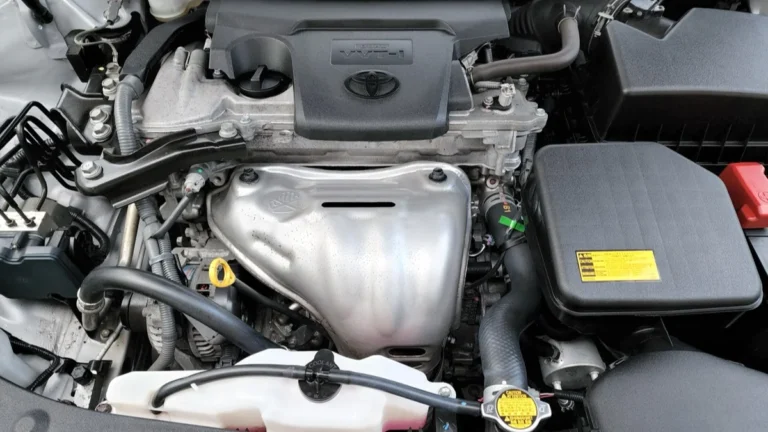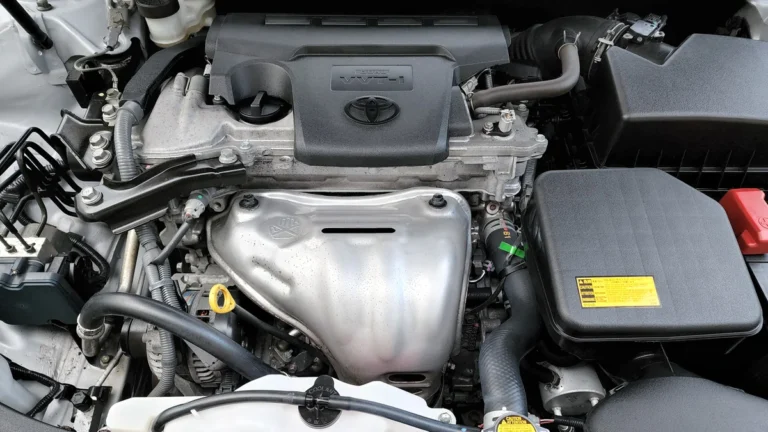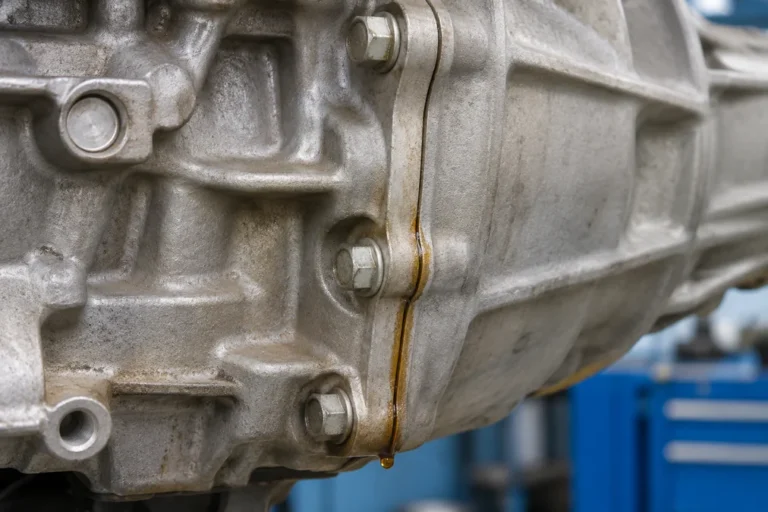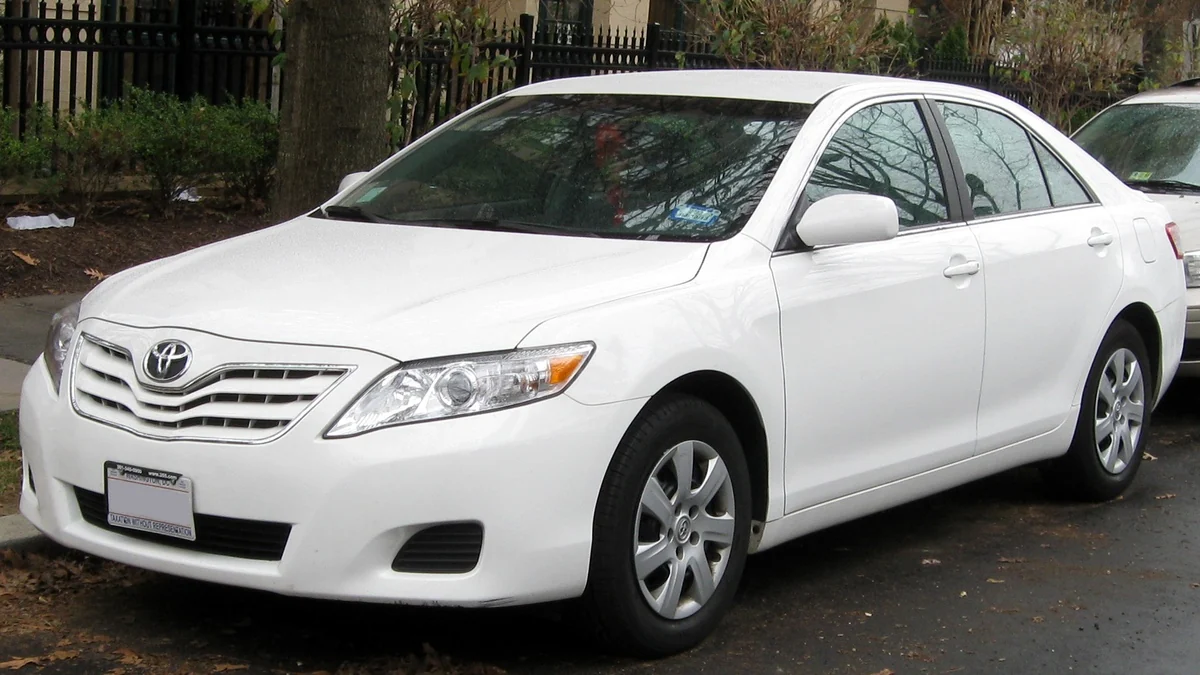
Quick answer: For a 2AR-FE Camry overheating at idle, record whether the A/C also stops cooling when the car is stationary. On certain US-market 2010–2011 Camry vehicles without a tow package, Toyota asks technicians to check whether the radiator fan blades have separated from the motor. A match changes the repair you should price. If the temperature warning comes on, stop safely and follow the owner’s manual.
What happens when the Camry stops?
Tell the workshop what changed first. Did the air from the vents become warm at a traffic light while the temperature reading stayed steady? Did the engine temperature rise while you were waiting in traffic? Toyota’s bulletin lists both complaints and says either can occur. Record what you already observed while driving and at a stop. Do not idle an overheating vehicle to complete the record.
Send the VIN, model year and market with those notes. For the Camry, Toyota bulletin T-SB-0205-12 specifies the US-market 2010–2011 2AR-FE application, vehicle descriptor BF3EK, without the tow package. A Camry badge or 2AR engine label alone will not settle whether the car falls within that scope. Ask the workshop to verify the VIN and equipment before using the bulletin as a repair plan.
Why check the blades and motor separately?
A cooling fan has a motor and a set of blades attached to its shaft. The blades move air through the radiator. Seeing a motor and electrical connector in place tells you little about whether the motor can still turn the blades. Toyota’s bulletin directs the technician to look for blades that have separated from the motor before following its repair steps.
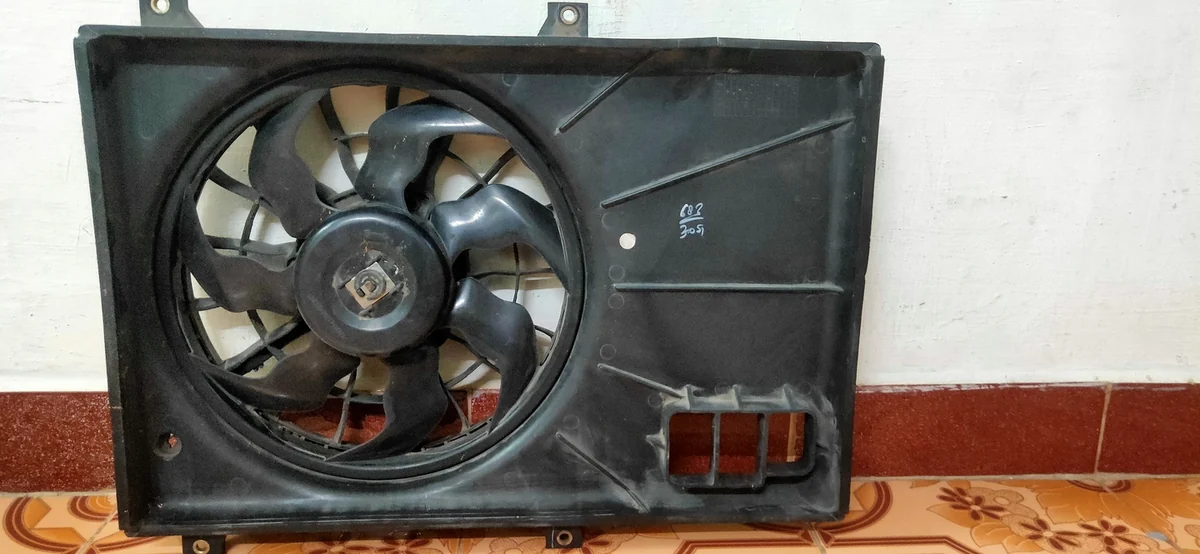
The photo shows a used fan assembly with the blades, central hub and surrounding shroud in view. It gives the buyer a vocabulary for the quote. Ask whether the shop means the blade unit, the motor that drives it, or the larger assembly with the shroud. Keep hands and tools clear of the fan and leave inspection to the technician.
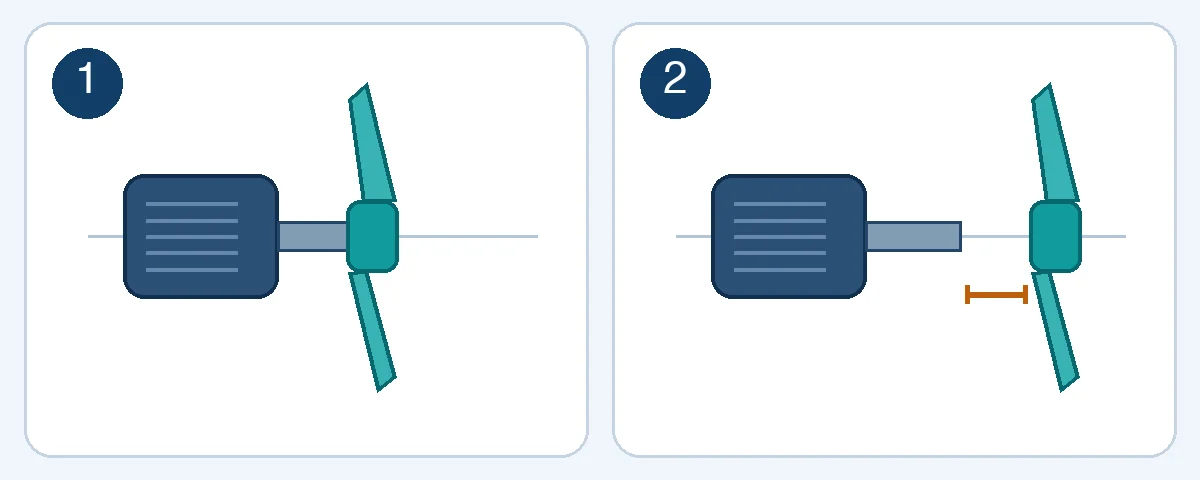
The connection shown in the first panel lets the shaft turn the blades. The second panel shows why a separated blade unit can no longer be driven at that joint. The sketch illustrates the mechanical relationship. The technician needs to record what they found on the actual vehicle, including whether the blades were still attached.
Which estimate should you request?
- The application matches and the blades have separated. Ask for the cooling fan work and engine control software update as separate lines on the workshop estimate. Toyota also calls for the motors to be inspected and replaced if found abnormal. Ask which motors, if any, failed inspection and whether the quote includes them.
- The blades are attached or the vehicle falls outside the bulletin. Toyota directs the shop back to the applicable repair manual when there is no separation. Ask for the next diagnostic step and a record of the finding before ordering parts. The fact that the problem appears at a stop is useful for the workshop, but does not identify the failed part on its own.
- The workshop finds separate damage after overheating. Ask what the findings show and whether the shop recommends repairing the existing engine or replacing it. Request a separate line for the cooling system work that must be completed either way. That way both estimates account for the original overheating complaint.
If the estimate says “computer,” ask whether it means updating the software in the existing unit. Toyota’s bulletin specifies a software update and excludes replacing the control module as part of that procedure. Ask the shop to record its final cooling and A/C checks on the repair order. When the vehicle is handed back, keep that repair order with the original complaint. If the symptom returns, the next technician can see which fan parts were replaced, whether the motors were inspected and whether the software was updated.
If the workshop recommends a long block, ask whether the fan assembly, related hardware and installation materials are supplied, carried over or ordered separately. Our guide to long-block scope explains why the name on the quote does not describe every part needed for installation. Use the repair or replacement comparison to compare both estimates with the same cooling work included.
How can NANXI POWER help with a 2AR enquiry?
If the repair assessment supports replacement, send the VIN, the original engine code and clear identification photos. NANXI POWER can help compare those details and confirm the engine configuration and which parts are included in the quotation. The 2AR Engine Long Block is listed in the Toyota engine catalogue. Confirm compatibility by VIN and ask the installer to check which cooling system parts belong on a separate order.
Toyota service information and image credits
Toyota T-SB-0205-12 gives vehicle limits on page 1 and the fan, motor and calibration repair sequence on pages 5–9. Use the current Toyota repair information for the specific VIN.
Camry photograph by IFCAR, released into the public domain, cropped for the cover and sharing. Fan photograph by Nadinviki, resized and compressed under CC BY-SA 4.0.
Share the VIN and the workshop’s findings
Use Contact NANXI POWER, WhatsApp or Email to send the engine identification and requested parts scope. You can also find us on Made-in-China, Alibaba.com International and LinkedIn.